

I have slept on the Gear Doctors Oxylus for a full season of weekend trips, mostly drive-in campsites in the Pacific Northwest, and I have a few things to say that the listing photos do not. The pad is 72 inches long, 22 inches wide and 1.5 inches thick. It weighs 2.2 pounds and carries a 4.3 R-value. Those numbers matter more than the word insulated on the box. I am 58, a retired school librarian, and I camp with my husband Glenn and our cattle dog mix Juniper, and I care about whether a pad is warm at 5 a.m. and whether it survives claws. This is the honest version, including the parts I did not expect.
Here is the short version nobody puts in the product title. The Oxylus is a self-inflating foam pad, not an air mattress. You unroll it, open the valve, wait, and close the valve when it feels right. Gear Doctors says pack to sleep-ready in under 5 minutes, and in my experience that is close if you are not fussing. The 1.5 inches of thickness is the detail to sit with. It is enough for back sleepers and side sleepers who like a firm surface. It is not a cloud. If you want to float, this is the wrong category.
The Quick Verdict
A warm, simple self-inflating pad for car campers who want a firm surface and do not mind a thin profile.
Amazon Check Today's Price →If You Want a Firm Pad That Sets Up Before the Coffee Boils, Start Here
The Gear Doctors Oxylus is the pad I leave in the car for weekend trips. Check the current listing for size, shipping and the carry bag details.
Amazon See Current Details on Amazon →How I've Used It
My use case is not extreme. I sleep in a tent at state parks and drive-in campgrounds from April to October, usually two nights at a time, with one longer trip each summer. The Oxylus lives in the back of our 2017 Subaru Outback along with Juniper's bed, a duffel and Glenn's cooler. I have set it up on gravel, on packed dirt and once on a wooden platform that was not quite level. I have not taken it alpine climbing. I have taken it through rain and morning condensation, and I have wiped it down with a damp cloth.
The first time I used it, I made the mistake of judging it while it was still inflating. I unrolled it, opened the valve and walked away to deal with the dog. When I came back, the pad had taken shape but felt soft in the middle. I closed the valve and pressed on it with my hand. That was better. The lesson is simple. Give it the five minutes. Do not open the valve, lie down immediately and decide it is defective. Self-inflating pads reward a little patience.
Glenn is 61 and has a back that complains on cold ground. He used the Oxylus for two nights in May and said it was firm enough, which from him is a real compliment. Juniper is 42 pounds and believes every sleeping pad is a dog bed. She has stepped on it with muddy paws and once dragged a claw across the surface. The pad has a water-resistant face and it has held up. I would not call it claw-proof. I would call it more forgiving than I expected.
One trip in June was a good test. We arrived late, the site was damp and the temperature was dropping. I unrolled the Oxylus while Glenn started dinner and Juniper supervised from the car. By the time I had the tent up, the pad was ready. I closed the valve, put on the sheet and slept through the night. That is not a dramatic story. It is the story I want from a sleeping pad. No drama, no leak, no waking up on the ground.
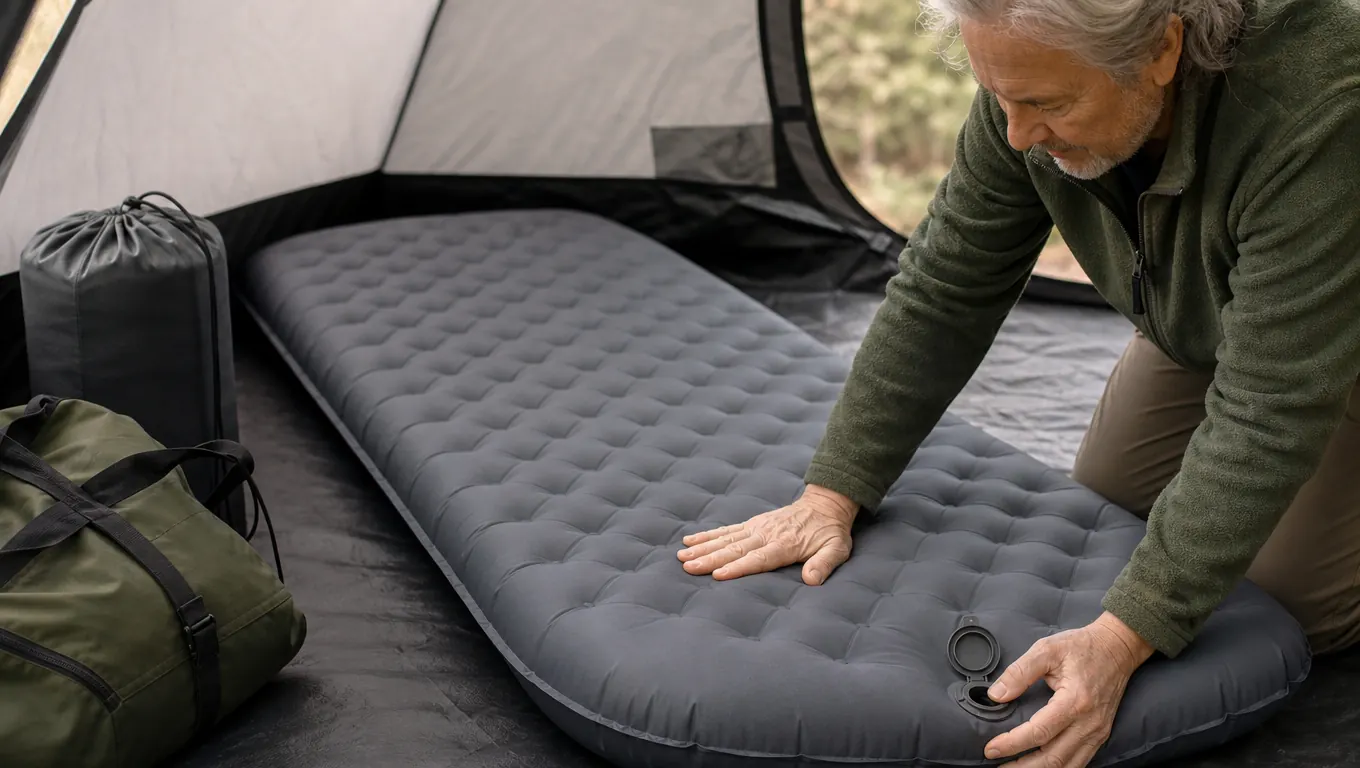
What the Specs Actually Tell You
The listing says 4.3 R-value. That is the number I care about most. R-value is a measure of resistance to heat loss, and 4.3 puts this pad in three-season territory for most people. It is not a winter pad for snow camping. It is warm enough for a Pacific Northwest spring, where the ground is cold and the air is damp. Gear Doctors calls it an insulated self-inflating pad, and the foam core is doing the work. You are not buying a thin air pocket that steals warmth from your body.
The 1.5 inch thickness is the trade-off. A thicker air pad will feel plusher, but it will also be a different product. The Oxylus is closer to a firm camp cot than a hotel mattress. I sleep on my back and side and I was comfortable. Glenn sleeps on his stomach and was fine. If you are a dedicated side sleeper with a bad hip, you may want more cushion under the pressure point. That is not a defect. It is a fit issue, and it is the thing I would tell a friend before they ordered.
The pad measures 72 inches long and 22 inches wide. I have room at the head and foot. Glenn is taller and his feet come close to the end but do not hang off. The 22 inch width is standard for a single pad. If you are broad-shouldered or you roll a lot, you will notice the edges. The 250 pound capacity is stated, and the pad feels stable under normal use. I would not treat that number as a challenge.
The weight is 2.2 pounds. For car camping, that is nothing. For backpacking, it is reasonable but not ultralight. The pad comes with a carry bag and a repair patch. I have used the bag every trip and the patch has stayed in the pocket. The valve is the only control you need to learn. There is no pump, no built-in inflator and no battery. That is the appeal. Fewer parts means fewer things to fail at 9 p.m. in the rain.
The Oxylus is not trying to be a thick air mattress. It is trying to be a warm, firm pad you can set up before the coffee boils, and at that job it works.
Where the Oxylus Surprised Me
The warmth surprised me. I expected a self-inflating pad at this thickness to feel cold underneath by 3 a.m. It did not. The 4.3 R-value and the foam core kept the ground chill away, even on a night that dropped into the low 40s. I used it with a flannel sheet and a 20 degree bag, and I was comfortable. I am not a cold sleeper, but I am also not 25 anymore. Warmth is the reason I would take this pad over a lighter air pad for a weekend car trip.
The setup surprised me in a good way. Unroll, open the valve, wait, close. That is it. The pad does not need a pump or a foot stomp. I timed it once and it was ready in under five minutes, close enough to the claim that I stopped counting. The carry bag is simple, not overbuilt. It has enough room that I am not wrestling the pad back in at the end of a trip. That sounds small until you have done it in a parking lot with a wet tent.
The surface has been easy to live with. It is water resistant, so morning condensation wipes off. Mud from Juniper's paws dries and brushes away. I have not had a puncture. I carry the repair patch anyway. There are no extra contours to fight with, which gives you a little more room to move. For car camping, that is fine. The medium firmness is firm enough for me and not so firm that it feels like a board.
One more surprise. The pad does not slide around much on a tent floor. I have used it on a smooth nylon floor and on a footprint under the stars. It stays put well enough. I would not call it sticky. I would call it stable. That is the kind of detail that does not show up in a spec sheet but makes a difference when you are getting up in the middle of the night and do not want to wake your husband by rearranging the bed.
Where It Falls Short
The thin profile is the main trade-off. At 1.5 inches, this pad does not hide roots, rocks or a lumpy site. I choose my tent spot more carefully with this pad than I would with a thick air mattress. If you have hip or shoulder pain, you may want a pad with more loft. I would not talk you out of that. The Oxylus is comfortable for me, but I am not everyone. A pad is a personal fit, like a pillow.
The 22 inch width is snug. I am average build and I was fine. Glenn is broader and said he noticed the edge when he rolled onto his side. If you are a restless sleeper, a wider pad may be worth the extra bulk in the car. The 72 inch length is also worth checking if you are tall. Glenn is taller than I am and he was at the limit. If you are taller than that, I would look at a longer pad. The capacity is 250 pounds, but length and width matter just as much as the number.
The self-inflating design has a rhythm, and if you ignore it, you will be unhappy. The pad needs time. It needs the valve open. It needs you to close the valve when it is firm. On a cold morning, it will feel firmer than it did the night before. That is normal. I have learned to open the valve and let it settle while I set up the rest of the camp. If you want instant, this is not instant. It is close, but it is not a switch.
The pad is not a backpacking pad for someone counting ounces. At 2.2 pounds, it is light enough for a short walk in, but it is not the pad I would choose for a long carry. The carry bag is basic. The repair patch is there for a reason. I have not needed it, but I am glad it is in the bag. Gear Doctors did not include a pump because the pad does not need one. That is a feature, not a missing part. It is also a limitation if you expected more.
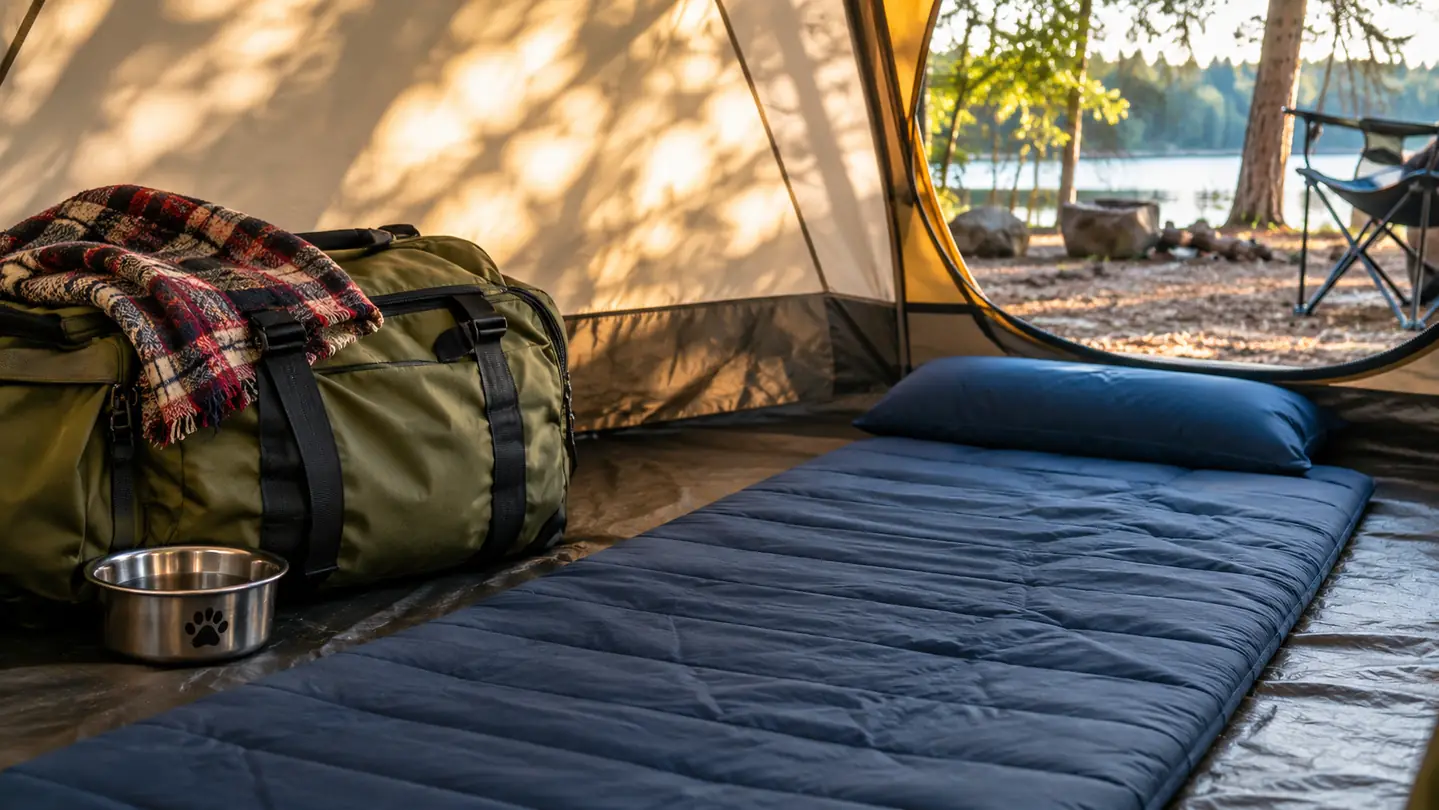
The Small Things I Noticed After a Season
After a season, the details that stand out are not the big claims. It is the valve. It is easy to grip, and it closes with a firm twist. I have not had it leak. It is the seam along the edge, which has stayed flat. It is the carry bag, which has not split. I sew equipment repairs as a hobby, so I notice stitching. The Oxylus is not a handmade piece, but the seams are straight and the fabric has not delaminated. That is what I want from a pad that lives in a car.
The pad also has a small footprint in the car. It rolls up and goes into the bag, and the bag fits behind the seat in the Outback without a fight. I cannot give you a packed size because I did not measure it, and the listing does not give one. What I can tell you is that it takes up less room than a thick air mattress and more room than a thin foam mat. That is the middle ground it occupies. If space is tight, that matters.
One thing I would tell a first-time buyer is to give the pad a night. The first night felt firmer than I expected. By the second night, I had stopped thinking about it. That is usually a good sign. A pad should disappear under you, not demand attention. The Oxylus did that once I stopped comparing it to the air mattress I used for years. It is a different surface, and it took one night to reset my expectations.
What I Liked
- Warm 4.3 R-value core for three-season camping
- 72 by 22 inch surface with 1.5 inches of foam
- Self-inflates in under 5 minutes with no pump
- 2.2 pounds and comes with carry bag and repair patch
- Water-resistant surface wipes clean
Where It Falls Short
- Thin for side sleepers who need pressure relief
- 22 inch width feels snug for broad shoulders
- 72 inch length is tight for taller sleepers
- Needs a few minutes and a closed valve to feel firm
- Not a winter pad and not ultralight for long carries
Who This Is For
This pad is for the weekend car camper who wants a simple bed, not a project. It is for the person who drives to the site, unloads a cooler and a dog, and wants to be sitting by the fire before dark. It is for back sleepers and side sleepers who like a firm surface. It is for couples who need two separate pads because one person rolls. And it is for anyone who has had a pump fail or an air mattress leak at the worst possible time. The Oxylus has fewer parts, and that is the point.
Who Should Skip It
Skip it if you need a thick, plush pad for a bad hip or shoulder. Skip it if you are over 6 feet tall and want room to spare. Skip it if you are a broad-shouldered side sleeper who needs a 25 inch width. Skip it if you are packing for a long backpacking trip where every ounce counts. And skip it if you want a pad that inflates itself with no waiting at all. The Oxylus asks for five minutes and a little attention. That is a fair ask, but it is still an ask.
A Simple Pad for Simple Trips, With No Pump to Lose
If the Oxylus fits how you camp, the current Amazon listing is the place to check the details. Read the size and warmth numbers against your own sleep style. That is the honest way to choose a pad.
Amazon See Current Details on Amazon →