

Somewhere around ten o'clock on a July night, flat on your back in a state park outside Shelton, the question of what you are sleeping on stops being a detail and becomes the whole trip. I have been on both sides of it. For years Glenn and I hauled a queen air mattress in the back of the Outback and called the result camping. Two seasons ago I started sleeping on a Gear Doctors Oxylus instead, and the change was not the dramatic upgrade the marketing suggests. It was more specific than that. It fixed certain problems and left others exactly where they were, and which problems you have depends entirely on how you camp.
Short answer: for one person in a tent, the Gear Doctors Oxylus is the better sleep once the temperature drops, and it is far easier to carry and to set up. For two people who want height off the ground and room to sprawl, a plain air mattress still wins, and I am not going to pretend otherwise. Everything below comes down to which of those two campers you are, because picking wrong here costs you a cold, sour night and a long drive home.
| Gear Doctors Oxylus | Air Mattress | |
|---|---|---|
| Height off the ground | 1.5 inches of foam and air, so you are close to the floor | sits you well up off the ground and is easier to stand up from |
| Warmth | 4.3 R-value foam core holds heat back from the cold ground | a large air chamber chills through the night |
| Packed size and weight | 2.2 pounds, rolls into the included carry bag | bulky when folded, takes up floor space in the car |
| Setup | unroll, open the valve, under five minutes by the listing | pump it up, then top it off again before bed |
| Two sleepers | single pad, 22 inches wide | holds two adults with room to roll over |
| Dog claws and punctures | foam keeps working after a puncture, repair patch included | one claw or one split seam and the night is over |
| Night two | self inflating, a few breaths to top it off | needs topping off again as the air contracts |
| Best for | one person, cold nights, a full car | two people, warm weekends, drive-in sites |
How I Have Been Testing Both
Our season runs from April to October, mostly drive-in sites in the Cascades and the coastal parks, plus one longer trip each summer. The Outback has to hold two adults, a cooler, a dog crate and the tent, so packed volume matters to me as much as comfort does. Juniper is a six-year-old cattle dog mix, about 42 pounds, and she believes that any sleeping surface on the ground belongs to her. That belief has ended more than one air mattress in the middle of the night, and it is the main reason I went looking for something with foam in it.
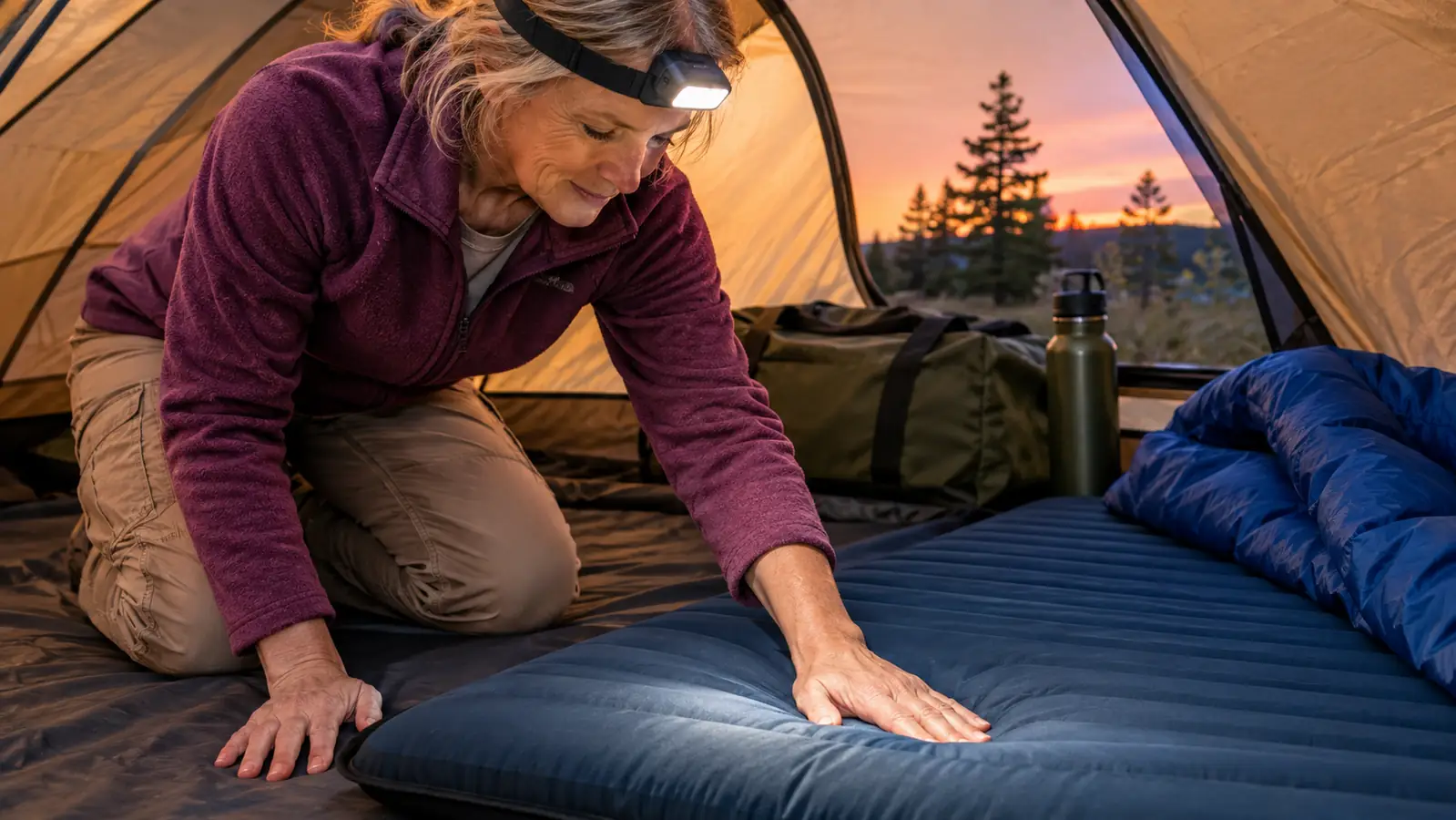
The Oxylus is a self-inflating pad. There is foam inside, an air valve at the corner, and 72 inches of length by 22 inches of width by 1.5 inches of thickness. It is rated to 250 pounds, weighs 2.2 pounds, and ships with a carry bag and a repair patch. I have slept on it in a tent, on the ground sheet of a lean-to, and once, badly, on a gravel pad when we arrived after dark and I did not want to argue with the site map. It has held up through two seasons of that treatment.
The air mattress is the plain queen we already owned, the kind that folds onto a shelf in the garage. It inflates with a pump that plugs into the car, it holds two adults, and it is comfortable in the way a bed at home is comfortable. It also loses a little air every night, so somebody has to top it off before bed and again at two in the morning, and somebody has to lie on it to push the last of the air out when it is time to leave. That somebody has usually been Glenn.
Where Gear Doctors Oxylus Wins
The warmth is the part I did not expect to care about as much as I do. The listing gives the pad a 4.3 R-value core, which is a technical way of saying the foam holds heat back from the ground instead of letting the ground pull it out of your back all night. A big air chamber does the opposite. The air inside it chills, the cold comes up through it, and by three in the morning a mattress that felt fine at bedtime feels like a water bed full of creek water. I sleep in wool socks on the pad in May and I am fine. On the air mattress in May I slept in wool socks, a hat and a fleece and I was still cold.
Setting up is the second difference, and it is the one Glenn notices, because he is the one who used to work the pump. The pad unrolls, the valve opens, and by the time I have the sleeping bag laid out it has mostly inflated itself. The listing says under five minutes from pack to sleep ready, and that matches what I have seen. When the night is cold and the foam is stiff, two or three breaths finish the job. There is no pump to find, no cord to run out to the car, and nothing to swear at in the dark.
Packing it away takes a knee and a minute. You roll it toward the valve, kneel on it to push the last of the air out, close the valve, and it goes into the carry bag at 2.2 pounds. That bag lives behind the driver's seat all summer, which is a thing I could never say about the air mattress. Ours took up most of the floor behind the front seats and still managed to be in the way when we packed the cooler.
Then there is Juniper. A foam core pad is not immune to her, but it is forgiving. A claw that would open an air chamber and end the night just leaves a mark in foam. If something does puncture the pad, the repair patch in the bag handles it and you still have foam underneath you while you wait. I also like that foam does not transfer motion the way a filled air chamber does, so when she turns around three times at four in the morning, I feel it the way you feel a cough, not the way you feel a wave.
Where an Air Mattress Wins
Now the honest part. An air mattress, properly inflated, sits you well off the ground, and at 58 with a hip that has opinions, that height is worth something. Getting up in the morning from a pad that is 1.5 inches thick is a hands and knees operation, then a push. Getting up from an air mattress is sitting up and standing. Dressing inside a tent is easier at that height too, and so is pulling on boots without folding yourself in half in a way your back will bring up later in the day.
An air mattress also holds two people. The Oxylus is a single pad, 22 inches wide, and two adults are not sharing it unless they are unusually fond of each other and unusually still. When Glenn and I slept on the queen we could both roll over without negotiating, and there is real comfort in that on a rainy night. An air mattress is more forgiving for a side sleeper who wants to sink in a little, too. The pad is a medium firmness and it stays that way, which I like and a side sleeper may not.
One more thing in its favor: room. On the queen I could stretch out, leave a book beside me, and not touch another human being all night if I wanted to. On a 22 inch pad you are on your back or on your side and there is not much else to choose from. If you read in the tent before sleep, or if you are the sort of person who spreads out, the mattress is simply more generous with space, and over three nights that is not a small thing.
By three in the morning a mattress that felt fine at bedtime feels like a water bed full of creek water.
If the cold coming up through the floor is the part you dread, start here
Self inflating, 4.3 R-value core, 2.2 pounds in the bag, rated to 250 pounds. This is the pad I sleep on from April to October, in a tent that also holds a 42 pound dog.
Amazon Check Today's Price on Amazon →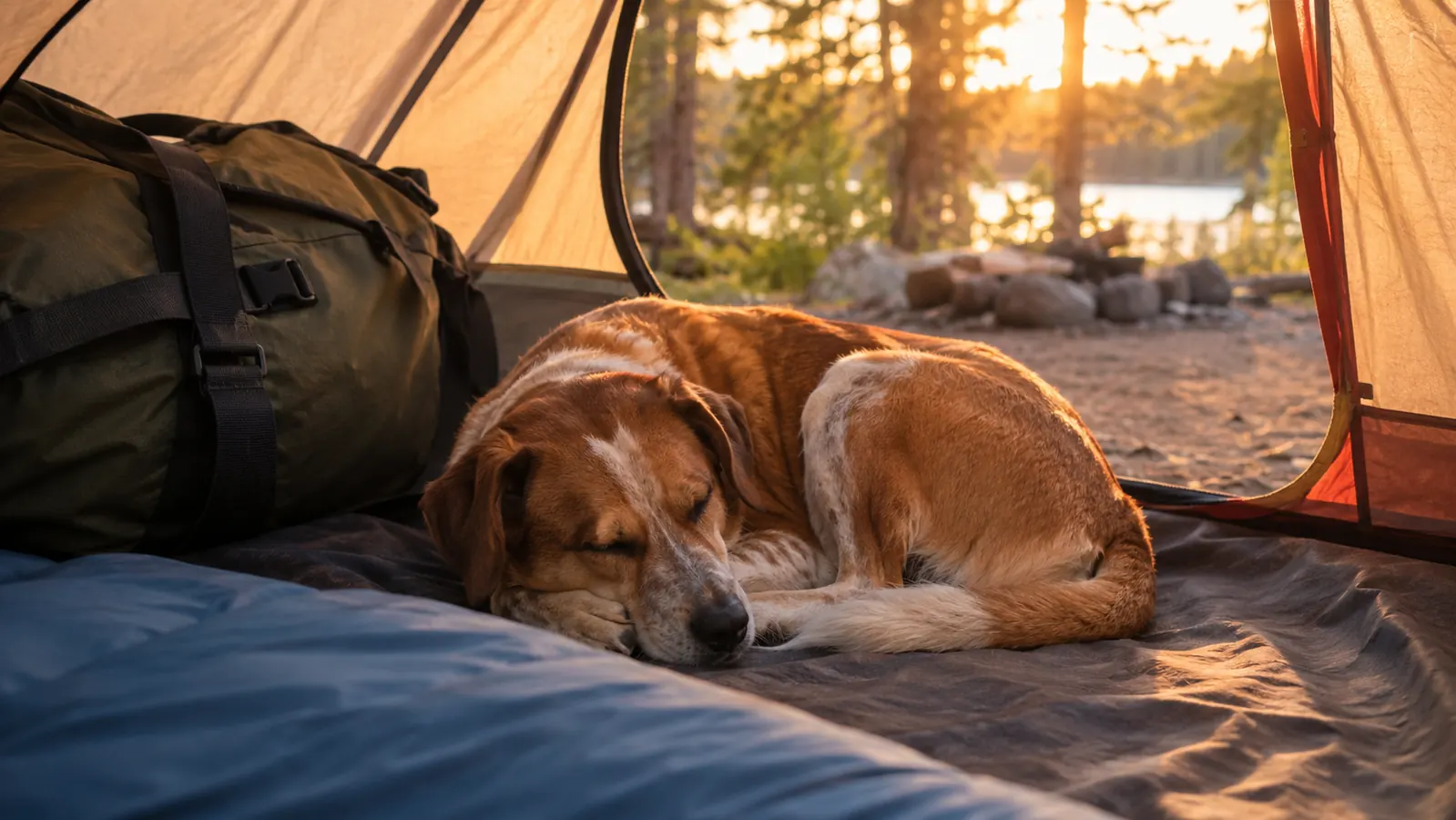
The Specs, Translated
Seventy-two inches of length fits most adults, and at five foot six I have room to spare at both ends, which means my pillow stays on the pad instead of sliding off it in the night. Twenty-two inches of width is the number to think hard about. That is narrower than a twin bed. If you are broad in the shoulders or you turn a great deal in your sleep, you will notice it, and no amount of good foam fixes a width problem.
The 1.5 inch thickness is the other number people get stuck on, because it sounds thin next to an air mattress. It is thin. What makes it work is that the foam is firm enough to hold you up rather than let you sink through to the ground, and the medium firmness rating is honest about that. On your back it is comfortable. On your side, with a hip that complains, you may want a thin closed cell pad underneath for extra height, which is what I do when the ground is frozen or rocky.
The 250 pound capacity covers most adults, and the 2.2 pounds matters more than it sounds if you ever carry your bed instead of parking beside it. Water resistance means a damp tent floor or a tipped water bottle is not an emergency, though I would not leave it out in the rain. The valve is adjustable, so you can let a little air out for a softer feel or add a couple of breaths for a firmer one. The carry bag and the repair patch both come with it, which is the sort of thing I have stopped taking for granted.
Who Should Buy Which
Buy the Gear Doctors Oxylus if you are one person in a tent, if you camp in the shoulder seasons or anywhere the nights run cold, if your car is already full, and if a dog shares your sleeping space. Buy it if you want to unroll something, open a valve, and be done with the whole business in under five minutes. Buy it if you have been cold on an air mattress and quietly blamed the sleeping bag.
Stay with an air mattress if you need height to get up in the morning, if two of you share a bed, or if you sleep hot in July and warmth is beside the point. Two adults, a warm weekend, a pump in the car and room in the trunk is a mattress trip and always will be. What I would not do is take an air mattress on a cold night, or on a trip where the dog sleeps inside the tent, because both of those are how you end up on the ground anyway, only tireder.
The way we have settled it is that both live in the garage and only one comes along on any given weekend. If the forecast has a low under about fifty, or if it is a solo trip, the Gear Doctors Oxylus goes in the car. If it is August, if Glenn is coming and we want the room, and if the site is a short walk from where we park, the mattress gets the pump and the pad stays home. Two seasons in, that split has not once been wrong.
One valve, one bag, one less thing to argue with at bedtime
72 by 22 by 1.5 inches, 2.2 pounds, rated to 250 pounds, carry bag and repair patch included. It rolls up small enough to live in the car all season.
Amazon Check Today's Price on Amazon →