
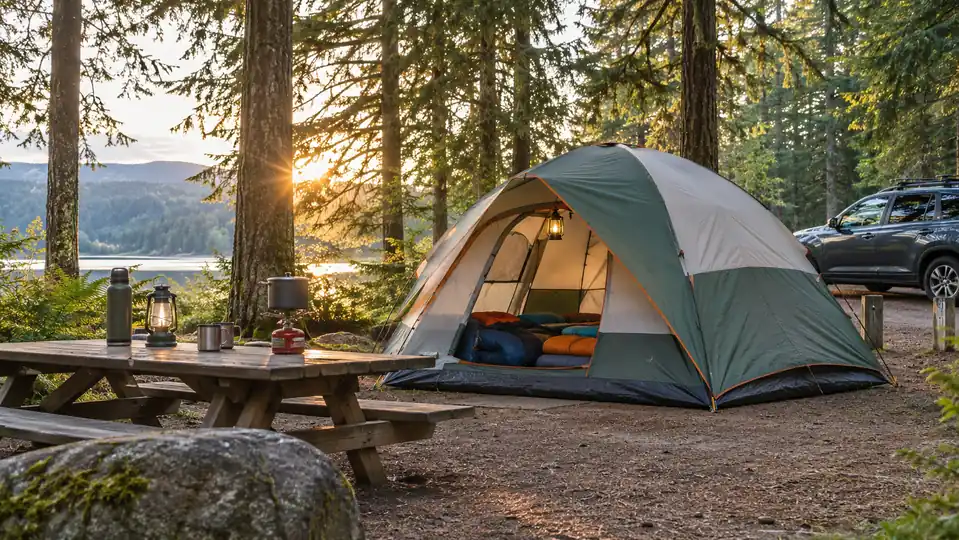
The first time I set up the Coleman Sundome in our driveway, Glenn stood behind me with a mug of coffee and said, 'That looks like a tent.' He was not wrong. The Sundome is a six-person camping tent with a rainfly, a 100 square foot floor, and a 6-foot center height, and it does not try to look like a cabin or a spaceship. What it tries to do is give two adults, a 42-pound cattle dog mix, and a weekend's worth of gear a dry place to sleep. After a full season of weekend car camping from April through October, mostly at state parks within two hours of Olympia, I have a clear picture of where it earns its space in the Outback and where it makes me sigh.
I did not test this tent in a lab. I tested it the way most people around here camp: drive in Friday after work, set up before dark, cook something simple, sleep, walk the dog, repeat. Some weekends were dry and warm. Some were wet enough that the picnic table wore a puddle. The tent went up and down at least fifteen times, sometimes with Juniper supervising from the car and sometimes with Glenn holding the rainfly by the wrong corner. That is the test that matters to me now. Not the brochure numbers, but whether a 58-year-old librarian and a 61-year-old man can put the thing up without a discussion that carries into dinner.
The Quick Verdict
A roomy, simple six-person tent that handles wet weekends well if you respect the rainfly and do not ask it to be a winter shelter.
Amazon Check Today's Price →The Weekend Tent That Keeps the Argument Short
The Coleman Sundome gives you 100 square feet, a 6-foot ceiling, and a rainfly that does its job when the forecast turns. For drive-in camping with a dog and two airbeds, it is the sensible pick.
Amazon See the Sundome on Amazon →How I've Used It
Our routine is not complicated. We leave Olympia on Friday, stop for ice, and pull into a state park by late afternoon. Glenn handles the cooler and the firewood. I handle the tent. Juniper handles the part where she walks through the door and immediately claims the middle of the sleeping pad. The Sundome fits in the Outback with the cooler, two camp chairs, a plastic bin of kitchen gear, and the dog's bed, which is the first real test. A tent can be great in a field and still be a nuisance if it eats the whole cargo area. This one packs into a bundle I can slide behind the passenger seat when we are tight on space.
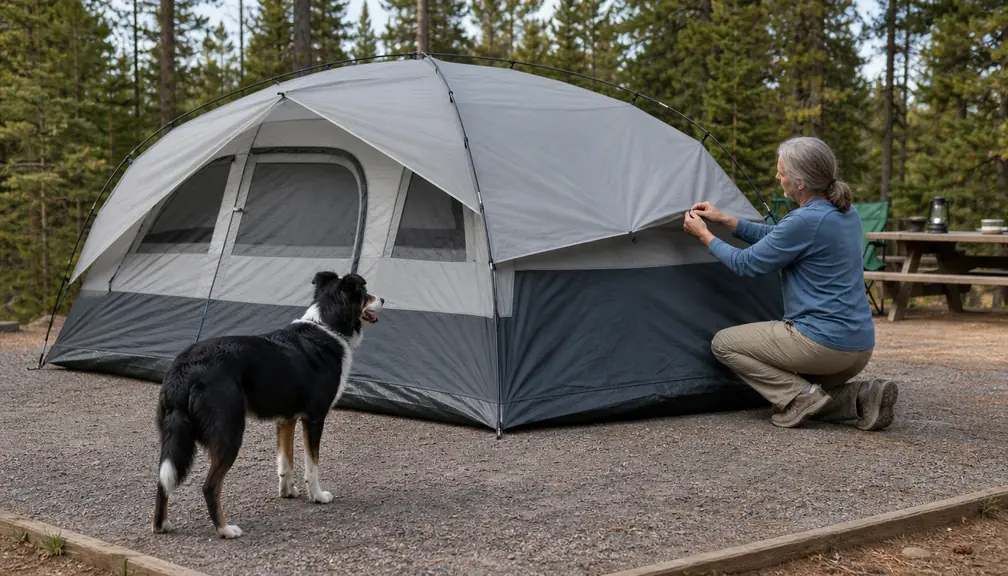
Setup takes me about ten minutes alone, and less if Glenn stays on the rainfly. The aluminum poles feed through, the tent stands up freestanding, and the buckles and zippers are the same kind of hardware I have used on other Coleman tents for years. I am not going to pretend I timed myself with a stopwatch. What I can tell you is that I can do it after a long drive without reading instructions, which is a better measure. The first few times, I put the rainfly on before I had the tent squared away. That was a mistake. Get the floor flat, get the door zipped the way you want it, and then deal with the rainfly.
We camped in light rain, steady rain, and one afternoon of wind that made the alders talk. The Sundome is a three-season tent, and I treated it like one. It kept us dry. The floor stayed dry under our airbeds. The rainfly did not flap itself into a knot. I did not ask it to stand up to a Pacific Northwest winter storm, because that is not what it is for. On the wet weekends, I was glad for the WeatherTec system and the polyester fabric, but I was more glad that I had put the rainfly on properly and left the ground vent open enough to let moisture out.
What the Sundome Gets Right on a Wet Weekend
The rainfly is the part that matters most in our climate, and it is the part I expected to dislike. A lot of tent rainflies feel like an afterthought, a thin square that covers the top and leaves the sides to fend for themselves. This one covers the roof and comes down far enough that I did not spend the night waiting for a drip to find my sleeping bag. The WeatherTec system is Coleman's name for its water resistance approach, and I cannot tell you what happens inside the seams at a molecular level. I can tell you that after a night of rain, the inside of the tent was dry enough that my paperback did not curl.
The ventilation is the other thing that matters. Two adults and a dog in a closed tent produce a surprising amount of moisture. The large windows and the ground vent give that moisture somewhere to go. On dry nights, I left the windows cracked and the vent open, and we did not wake up in a cloud. On rainy nights, I closed what needed closing and still left the vent alone. That made the difference between a tent that feels like a plastic bag and a tent that feels like a small room. The 6-foot center height helps here too. I can stand up to pull on pants, which sounds like a small thing until you have tried to dress while bent double in a tent that is only four feet tall.
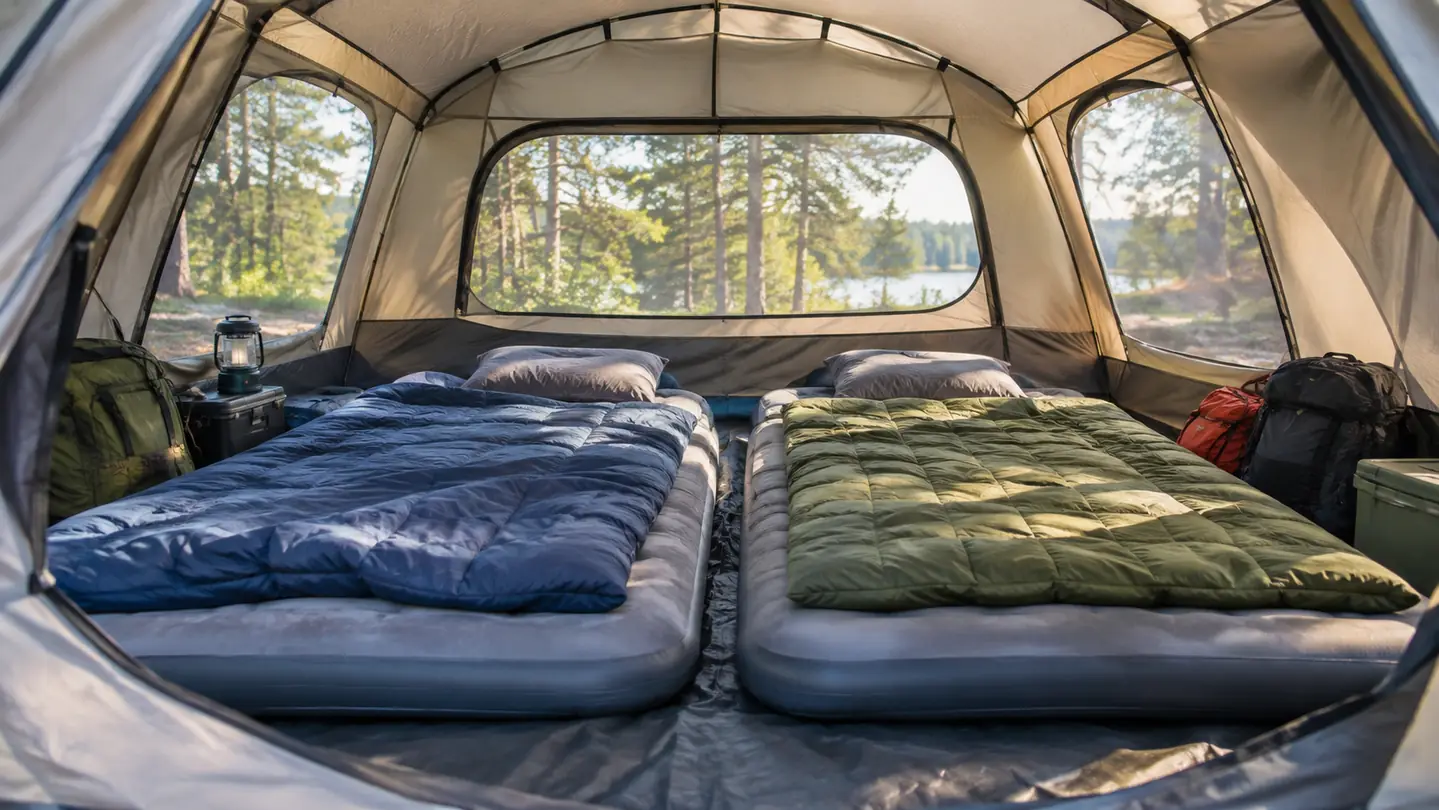
The floor area is the number I keep coming back to. 100 square feet is enough for two queen-size airbeds with a little space between them and room at the foot for duffels. Coleman lists a six-person capacity, and I would call that optimistic for six adults with gear. For two adults, a dog, and a weekend's clutter, it is generous. For a family with kids, it is a reasonable base camp if the kids are small and the weather is good. I would not put six grown adults in it and expect everyone to stay friendly. I would put two adults and a dog in it every weekend and never feel cramped.
Living With a 100 Square Foot Floor
Here is what 100 square feet actually feels like after a few weekends. Two queen airbeds fit side by side, but they take up most of the width. That leaves a strip down the middle and a little room at the head and foot. Juniper, who is 42 pounds of opinions, claims the strip. I step over her at night and she does not move. If you are the kind of camper who wants a chair inside the tent, this is not that tent. If you want to sit on the edge of the airbed and read with the door open, it is exactly enough. The 6-foot center height gives you headroom, but you will stand in the middle to use it. That is normal for a tent this size. It is not a cabin.
We kept our gear simple because the Outback was already full. Two duffels, a small bin of kitchen things, a camp chair each, and the dog's bed. The duffels went at the foot of the airbeds. The kitchen bin stayed in the car. That is the honest version of car camping, and the Sundome accommodated it without a puzzle. If you bring a lot of hard-sided bins, you will spend time moving them around. The tent does not have a garage. It has a floor, walls, a rainfly, and a door. That is the deal.
The zippers have been the small friction. They work. They have not failed. But the door zipper takes a little care at the corner, especially when the tent is not perfectly square on the ground. If the floor is twisted, the zipper lets you know. I learned to set the tent, step back, and look at it before I zipped anything. That is not a defect. It is the nature of a zipper on a fabric shelter. My sewing habit makes me notice these things. A zipper that runs clean is a pleasure. A zipper that catches is a reminder to slow down.
The Setup, the Zippers, and the Small Frictions
Setup has a rhythm that I have come to like. I lay the tent out, feed the aluminum poles, and lift. The freestanding design means I can move it a foot to the left if I have misjudged the flat spot. That is a small luxury when you are setting up in the last of the light. The buckles on the rainfly are easy to work with cold hands. I do not need to take off my gloves. That matters in April and October. The whole process is simple enough that I can do it while Glenn is still arguing with the cooler lid.
Taking it down is the part that tests my patience, and that is true of every tent. The fabric has to be dry before it goes into the car, or it has to come out the minute we get home. I have done both. After a wet weekend, I set it up in the garage, wiped what I could, and let it air out overnight. The polyester fabric has held up well through a season of that. The UV protection matters more than I expected, because we leave the tent up all weekend in full sun at some parks. The fabric has not faded in a way that worries me, and the rainfly still does its job.
The one thing I would change is the door zipper. Not the zipper itself, but the way it demands a square pitch. If you are the kind of person who throws a tent up and promises to fix it later, this tent will remind you. I am not that person, mostly because I have repaired enough seams to know that fabric under tension does not age well. So I take the extra minute. I square the floor. I check the door. Then I zip. That minute is the difference between a calm weekend and a zipper that makes you say words you do not want the campground host to hear.
Where the Sundome Shows Its Limits
The Sundome is a three-season tent, and I would not push it past that. It is not a winter shelter. It is not the tent I would choose for an exposed ridge in a blow. The large windows are wonderful in July and less wonderful when the wind is driving rain sideways. We were never uncomfortable, but we also chose sheltered sites. If you camp in open fields or at elevation in shoulder season, you will want a different tool. That is not a knock. It is a boundary. Know where the boundary is and the tent will serve you well.
The six-person label is the other limit. It fits six sleeping bodies if those bodies are small and the gear stays in the car. It fits two adults and a dog beautifully. It fits a family with two young kids well enough. It does not fit four teenagers and a week of gear without a system. I would rather have a tent that is honest about being roomy for two or three than a tent that claims six and feels like a sardine can. Coleman could call this a four-person tent and I would still buy it for our use. I am glad they did not, because the extra floor space is the point.
What I Liked
- 100 square feet fits two queen airbeds with room at the foot for duffels
- 6-foot center height lets most adults stand up to change clothes
- Rainfly and WeatherTec system kept us dry through steady weekend rain
- Large windows and ground vent reduce condensation with two adults and a dog
- Aluminum poles and freestanding design go up without a fight
- Polyester fabric and UV protection held up to a season of sun
Where It Falls Short
- Six-person rating is optimistic for six adults with gear
- Useful standing space is in the middle rather than along the edges
- Door zipper needs a square pitch to run clean
- Not a four-season tent and not meant for winter storms
- No room for chairs or hard-sided bins inside
After a night of steady rain, the floor under our airbeds was dry and my paperback had not curled. That is the review.
Who This Is For
This tent is for the weekend car camper who wants a simple, roomy shelter that goes up without a fight. It is for couples who bring two queen airbeds and a dog. It is for a small family with young kids who want a base camp at a state park. It is for the person who camps from spring through fall, checks the forecast, and knows that a three-season tent is not a winter tent. If you want to stand up to change clothes, keep your gear inside with you, and still fit everything in a wagon or a small SUV, the Sundome makes sense.
Who Should Skip It
Skip it if you camp in winter, if you need a tent that handles exposed ridgelines, or if you routinely camp with six adults and a mountain of hard-sided gear. Skip it if you want a cabin-style tent with vertical walls and a room divider. Skip it if you refuse to square a floor before zipping a door. None of those are insults. They are different jobs. The Sundome is a good tool for a specific job, and it does that job without asking for much attention.
If Your Weekend Forecast Has a Cloud In It
The Coleman Sundome is a three-season tent for people who want space, a simple setup, and a rainfly that does its job. Read the specs, check the listing on Amazon, and decide if it fits the way you camp.
Amazon See the Sundome on Amazon →