
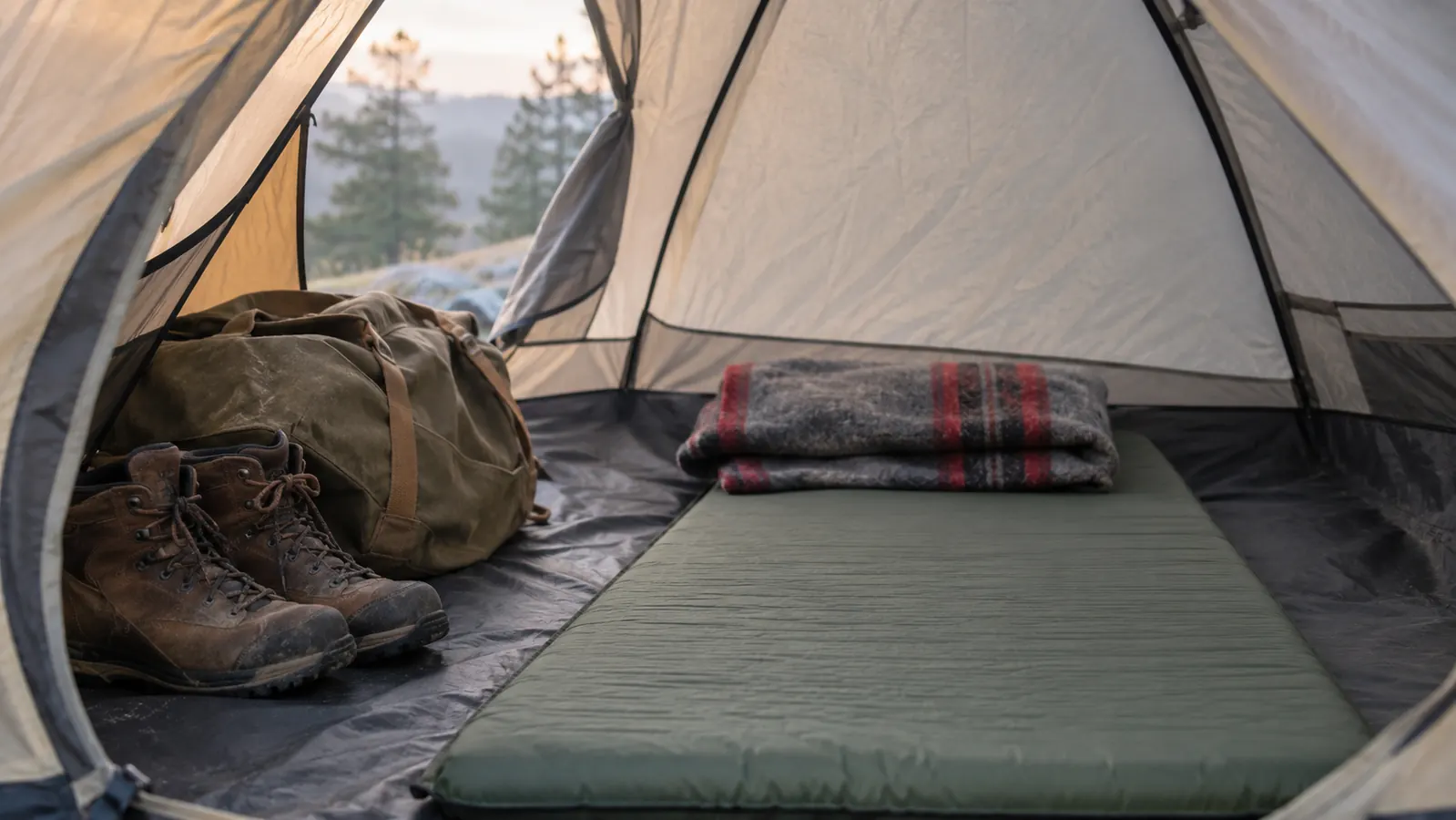
Three nights into a week at a state park outside Forks, I noticed I had stopped thinking about my hips. That is most of the review, really. I am 58, I have slept on campground ground since I was a teenager, and I had reached the point where one bad night meant a wasted next day and a husband doing all the firewood himself. So when I tell you a sleeping pad worked, I mean it in the plain, practical way that matters at six in the morning, when your back decides whether the day happens.
The pad is the Gear Doctors Oxylus Insulated Self Inflating Sleeping Pad. I have slept on it somewhere north of 40 nights since April, mostly drive-in campgrounds and state parks between Olympia and the coast, plus one longer August trip. It measures 72 inches long, 22 inches wide and 1.5 inches thick. It weighs 2.2 pounds. It has a foam core that fills itself once you open the valve, a 4.3 R-value, a listed capacity of 250 pounds, and it ships with a carry bag and a repair patch. That is the whole inventory. Everything after this is what those numbers felt like underneath me.
The Quick Verdict
A thin, light, genuinely self-filling pad that suits an average-build sleeper on a gravel or dirt site. Not enough cushion for hard ground, heavy sleepers or anyone who rolls hard.
Amazon Check Today's Price →Three minutes to set up, 2.2 pounds to carry, and a 4.3 R-value core
It took over the job a bulky air mattress used to do in the back of our Outback, and it gave me back the floor space. Check today's price and the exact sizing on Amazon before your next reservation.
Amazon Check Today's Price on Amazon →How I've Used It
Our season runs April through October. We are weekend campers, not backpackers. We drive to a site, we set up, we cook, we sleep, we do it again. Everything goes in a 2017 Subaru Outback along with a cooler, two camp chairs and Juniper, our 6-year-old cattle dog mix, who weighs about 42 pounds and believes any pad on the ground exists for her comfort. Glenn handles the cooler and the fire. He is not allowed near the tent poles, a rule that has kept our marriage pleasant for 30-odd years.
My job is the tent and the sleeping arrangements, which means I am the one who unrolls the pad, checks the valve, and decides whether the ground underneath is going to be a problem. Over the season that has meant gravel pads in the Cascades foothills, packed dirt out on the coast, one site with roots I could feel through everything else we own, and a stretch of warm July nights where the only complaint was a dog standing on my ankles at four in the morning.
One trip is worth describing because it is the kind of trip most people reading this will actually take. Mid-July, a Friday, we pulled into a site near Belfair at about six in the evening after a full workday. The pad was the last thing out of the car and the first thing down in the tent. I unrolled it while Glenn got the cooler sorted, opened the valve, and went back out to help with the chairs. By the time we ate, it had filled. I did not think about it again until morning, which is the highest compliment I can pay a piece of camping equipment.
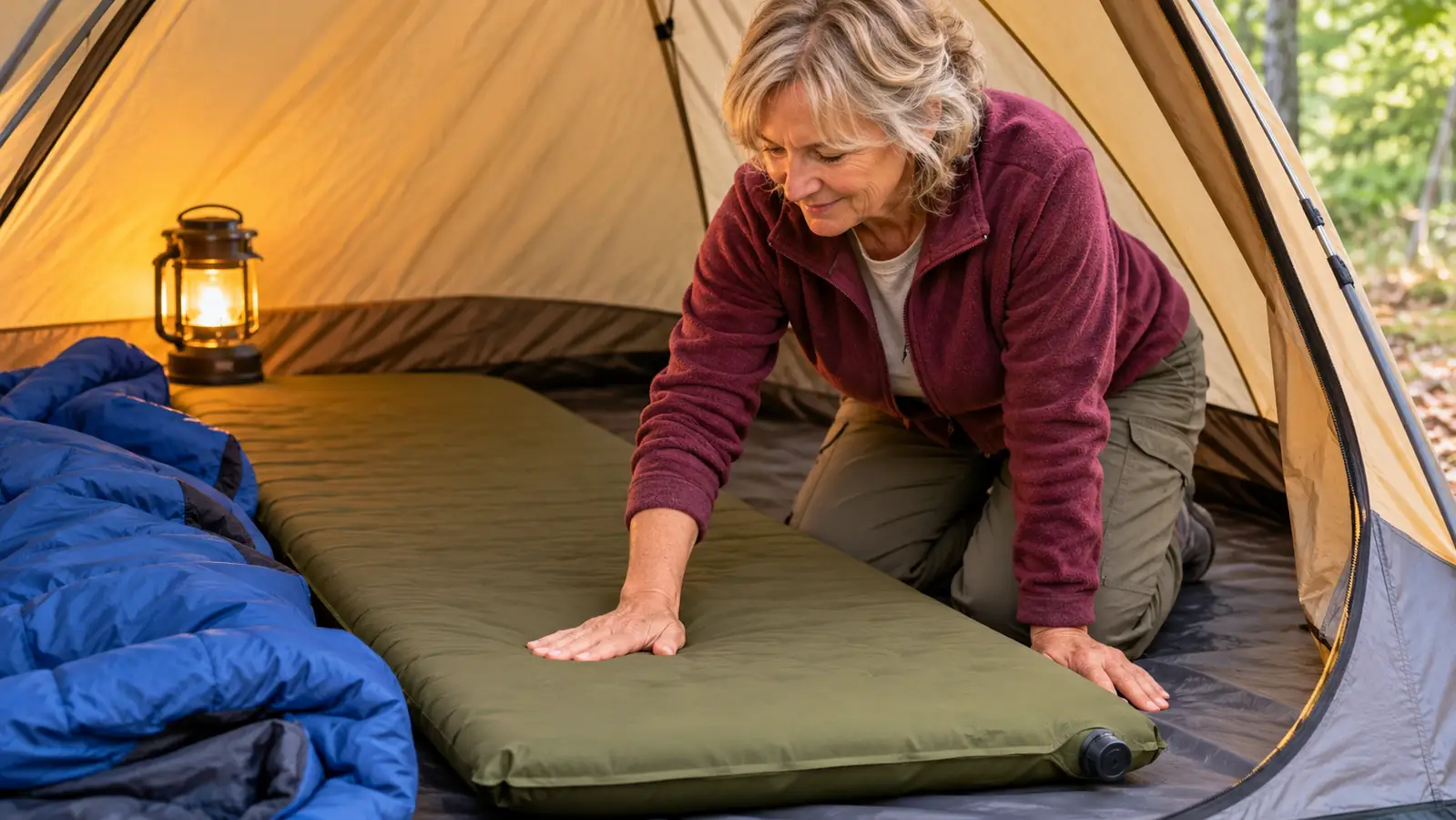
What the Numbers Mean Once You Are Lying on Them
Seventy-two inches by 22 inches is a standard single. I am 5 foot 6 and it is plenty long for me. Glenn is 6 foot 1 and tried it once out of curiosity. His feet stayed on, but his elbows did not. If you are tall, or if you roll in your sleep, 22 inches is the number to pay attention to, because it is the one that decides whether you wake up on the pad or beside it.
The thickness is where opinions divide. One and a half inches is not a thick air mattress. It is a foam pad with air in it and it feels like one. For me that is a feature, since I sleep better on something with a little resistance than on a balloon. The listing calls the firmness medium, and at full inflation that is accurate. Back sleepers will be fine. Side sleepers need to let a bit of air out so a hip can sink in, and once I started doing that, my shoulder stopped waking me up at two.
Before this I tried a thin closed-cell foam mat, the kind that costs almost nothing and folds like an accordion. It kept the cold out and it did nothing at all for my hip. Then I tried a thicker inflatable with no foam inside it. That one was comfortable right up until the temperature dropped, at which point it turned into a cold balloon and I spent the night curled up like a shrimp. The Oxylus sits between those two, with foam for warmth and a little air for give, and that combination is the reason it has stayed in the car all season.
The 4.3 R-value is doing real work. The foam core plus the trapped air means the cold comes up slower than it does through a plain inflatable, which is the main practical argument for this over the air mattress a lot of us already own. If you are still weighing those two against each other, the space it takes up in the car is usually what settles it, and I will come back to that.
Weight is 2.2 pounds, which is not a backpacking number and does not pretend to be. It is a car camping number. It goes from the back of the wagon to the tent in one hand with a duffel in the other, and that is the standard I actually care about at this stage of my life. The rectangular shape means no tapered foot box and no wrestling match at the end of the night, which sounds like a small thing until you have had one.
Setting It Up and Packing It Away
Gear Doctors claims pack to sleep-ready in under five minutes. Mine takes about three. I unroll it, open the valve, and go do something else, which is usually filling water bottles or arguing with the rain fly. By the time I come back it is most of the way there. I top it off with two or three breaths, close the valve, and that is the entire job. No pump, no separate inflator to lose, nothing to plug in.
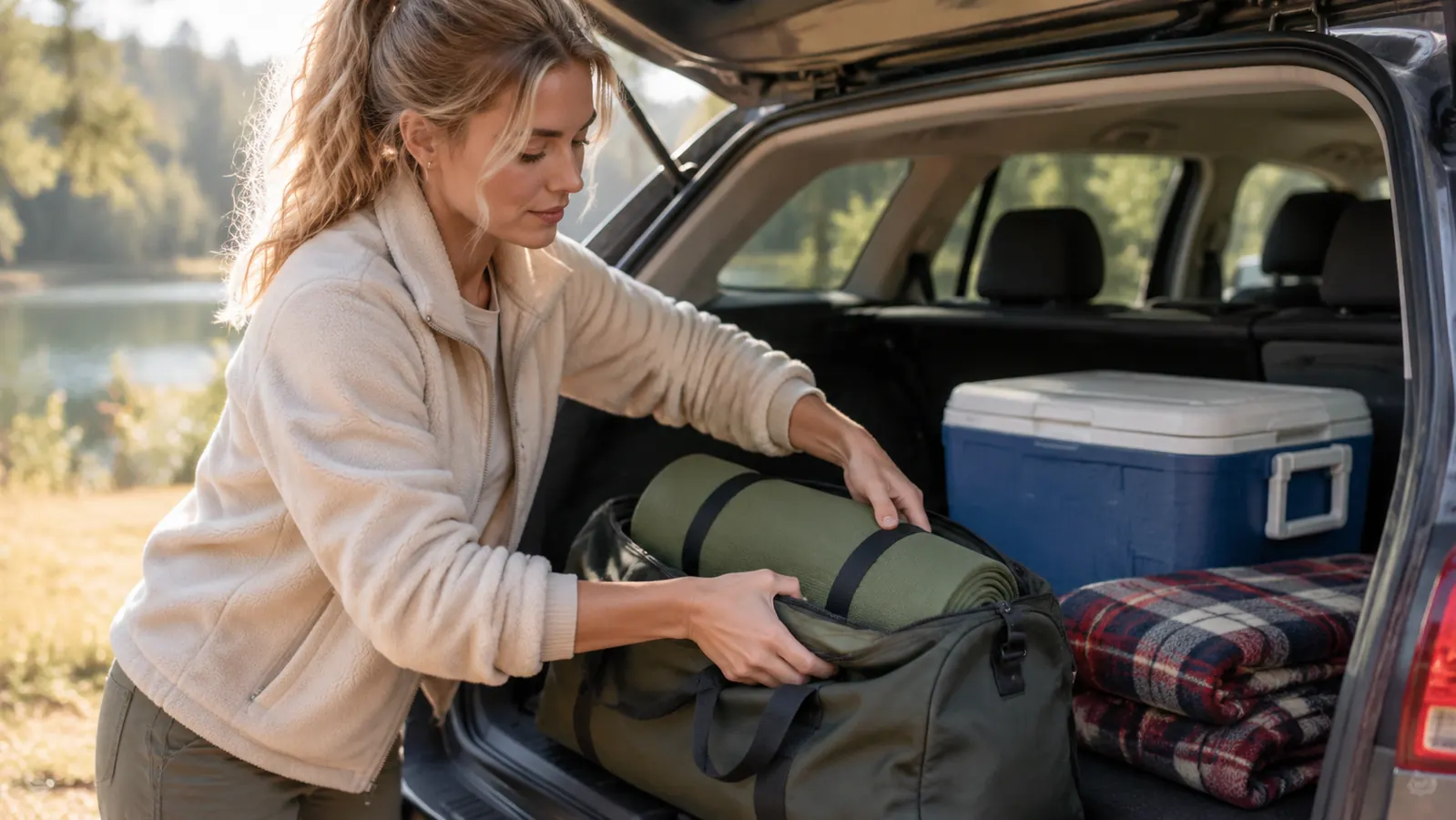
Taking it down is the slower half. Roll it toward the valve with the valve open and kneel on it as you go, or you will fight the foam the whole way to the bag. I fold it in thirds first, then roll. The carry bag has room if you do it that way, though not a generous amount of room. On a wet morning I roll it damp, put it in the bag, and unroll it flat in the garage that evening, because a foam pad that stays sealed up wet all week is a foam pad that smells like a basement.
There is one trick that saved my mornings. I lay the bag flat on the tent floor and push the rolled pad in from the foot end, then close the drawstring while kneeling on the whole thing. My first two attempts involved standing on it and wrestling, which is how I put a crease in the foam that took a week to flatten back out. The wet morning that taught me the rest was a coastal site in May, when everything we owned was beaded with condensation and I rolled the pad damp without thinking. By Wednesday it smelled like a wet basement. Now it comes out of the bag the moment we get home, wet or not.
The repair patch lives in the bag and I have not needed it. The valve seats properly every single time, which is a small thing right up until it is not. At home the pad stays flat under the guest bed with the valve open so the foam can recover, and that one habit is worth more than any cleaning product anyone will try to sell you.
Warmth, Firmness and What a Night Actually Felt Like
The cold night that tested it came in early September at about 34 degrees, on gravel, with a 20-degree bag. My back stayed warm. My face was cold, which is not the pad's department. On warmer nights I have slept on it with just a sheet over the top and been comfortable. A 4.3 rating is not a winter number and I would not take it out in the snow, but for three-season camping in western Washington it has been enough every time.
It does not crinkle and it does not slide. I say that because the last inflatable we owned crinkled like a bag of chips every time either of us turned over, and it wandered toward the tent wall by morning. This one stays where I put it. The surface is water resistant, so a damp tent floor and a wet dog have not turned into a soaked sleeping bag, and that is the full extent of the claim I am making about it.
The other thing I learned is to carry a thin blanket to put under the pad, not over it. On gravel, a blanket underneath does more for warmth than anything you can pile on top, and I also started letting air out before I get in rather than after. Adjusting once I am already lying down means sitting up in the cold and hunting for a valve in the dark, and I have done that exactly once. The pad holds the firmness I set it to. It does not slowly go soft over the course of a night the way the inflatable did.
Juniper has walked on it, sat on it, and once, memorably, dug at it for two seconds before I got her off. The surface has held. There are no punctures and no marks that matter. If you camp with a dog and you have been treating a sleeping pad as a fragile object that lives in a special place in the car, this one has been treated like a floor mat and has not complained once.
How It Held Up Over a Season
I sew. I repair canvas and I have re-stitched more than one tent seam, so I look at stitching the way other people look at a used car. The seams along the perimeter are straight and even. I went over them with a thumbnail at the end of the season and found no loose thread and no place where the fabric is pulling away from the bond. I have not had to test the Gear Doctors repair patch, and I would like to keep it that way.
The foam has taken a slight permanent set at the hips, which is normal for a self-inflating pad and not a defect. It still fills. It still gets firm. What has changed is that it takes an extra minute to reach full loft in cool weather, which is the foam being honest with me about the temperature rather than a failure of any kind.
The valve is the part I watch, since a valve is the first thing to go on anything inflatable. It screws down cleanly, it has not cross-threaded, and it has not leaked overnight. Forty nights is not a decade and I am not going to tell you this pad will last one. I will tell you that after a full season of gravel, mud, a 42-pound dog and being rolled up wet more than once, nothing has failed and nothing has needed the patch.
What I Liked
- 1.5 inches of foam and air that holds up under a 58-year-old back without feeling like a balloon
- Self-inflates from the valve in about three minutes with no pump to carry or lose
- The 4.3 R-value kept ground cold out on a 34-degree night in September
- 2.2 pounds and a carry bag mean it goes from wagon to tent in one trip
- Survived a full season of gravel, mud and dog claws with no punctures
Where It Falls Short
- 22 inches wide is tight for a tall sleeper or anyone who rolls
- 1.5 inches is thin if you are heavy or sleeping on roots and rock
- Rolling it back into the carry bag takes technique and a knee
- The foam needs an extra minute to loft on cold mornings
Forty nights on gravel, dirt and one rooty site, and the only thing I changed was letting a little air out so my hip could sink in.
Who This Is For
This is for the drive-in camper in their 40s, 50s or 60s who wants a pad they can unroll, open and then forget about. It suits an average-build side or back sleeper who is in a tent two or three nights at a stretch and does not want to own a pump, a separate inflator or a system of any kind. It is also for anyone who camps with a dog and needs something that can be walked on, sat on and occasionally dug at.
It is a good fit for a couple where one person handles the tent and the other handles the fire, because the Gear Doctors pad is one object, one valve, one bag, and no discussion. And it suits anyone who has been sleeping on a thick air mattress and is tired of giving up half the cargo area to it.
Who Should Skip It
Skip it if you are a committed side sleeper who needs two or more inches of cushion, or if you are near the 250-pound listed capacity and sleep on hard ground. Skip it if you are backpacking, because 2.2 pounds and a foam core are not what you want on your back for ten miles. Skip it if you sleep on your stomach with your arms out, because 22 inches does not leave room for that. And if you camp in the snow, the 4.3 R-value is not enough, which you probably already knew.
If your back has been deciding whether the weekend happens, start here
Forty nights in, nothing has failed and nothing has needed the repair patch. Check the current price and the sizing on Amazon before your next reservation.
Amazon Check Today's Price on Amazon →