
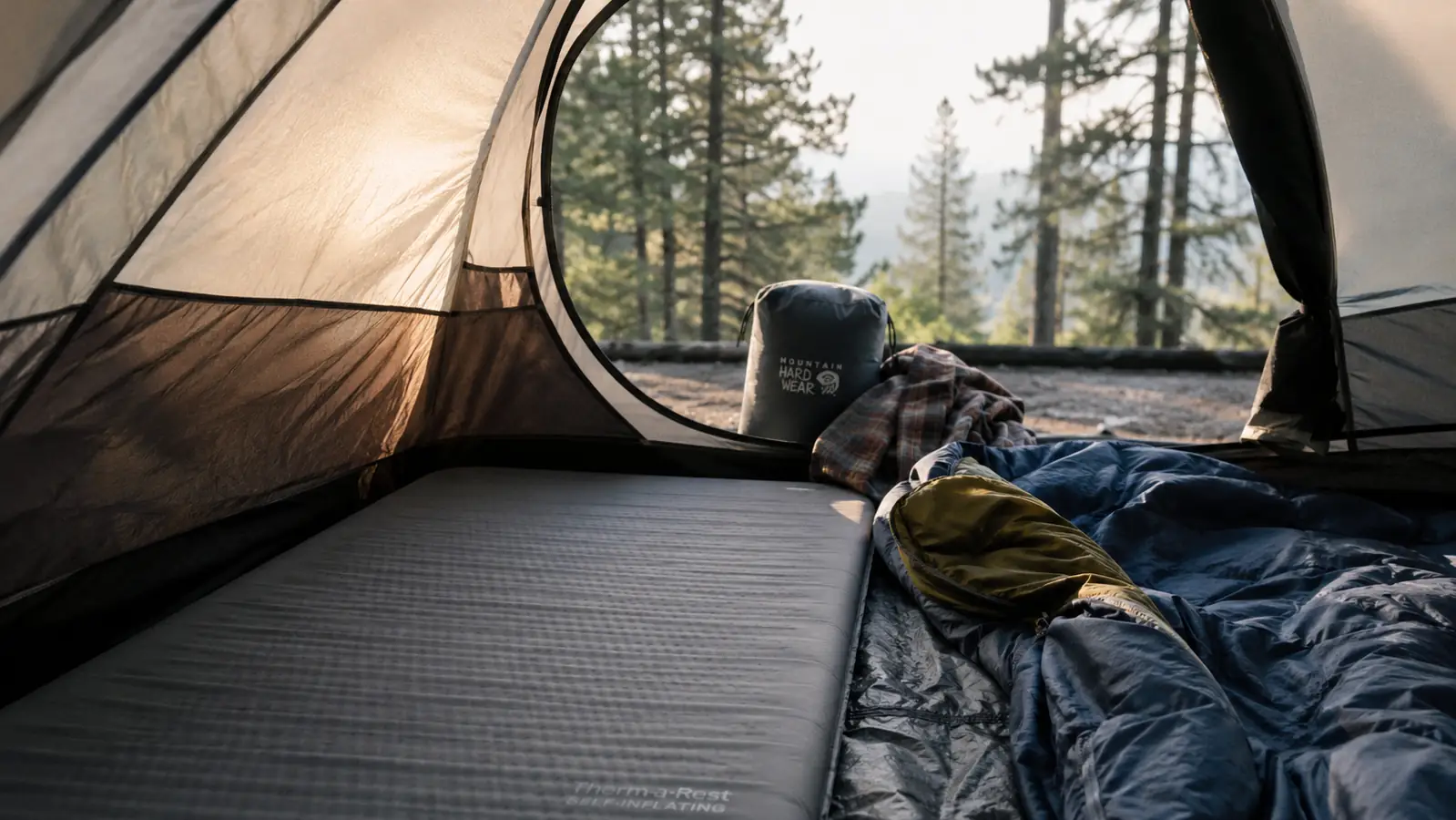
The first time an air mattress went flat under me at 2:40 in the morning, I blamed Juniper. She was asleep against my ribs, all 42 pounds of her, and I could feel the cold ground coming up through the vinyl. It wasn't the dog. It was the mattress. That was four seasons ago, and I have not slept on one since. What replaced it in the back of our 2017 Outback is a self-inflating pad, and the difference is not a small one.
I am not going to pretend a pad is a bed. It is not. But if you camp the way Glenn and I camp, drive-in sites, state parks, a cooler sliding around in the way, and a dog who believes the sleeping area belongs to her, the Gear Doctors Oxylus does something an air mattress cannot. It holds its air inside foam instead of inside a vinyl bag. That single fact changes the whole night. Here are ten reasons I stopped hauling an air mattress and started rolling this one out instead.
The pad that stopped me losing sleep over a leak
The Gear Doctors Oxylus Insulated Self Inflating Sleeping Pad. 72 by 22 inches, 1.5 inches thick, 2.2 pounds, rated to 250 pounds. Carry bag and repair patch in the box.
Amazon Check Today's Price on Amazon →It holds you at 1.5 inches instead of letting you sink to the floor
An air mattress is a bag of air. When it loses a little, you do not lose a little, you lose all of it at once, usually right under your hips. The Gear Doctors pad is 1.5 inches thick with a foam core inside and rated to 250 pounds, so my hips stay off the ground when I shift in the night. Glenn is 61 with a bad shoulder and he notices this more than I do. It gives about as much as a firm couch cushion. It does not give all at once.
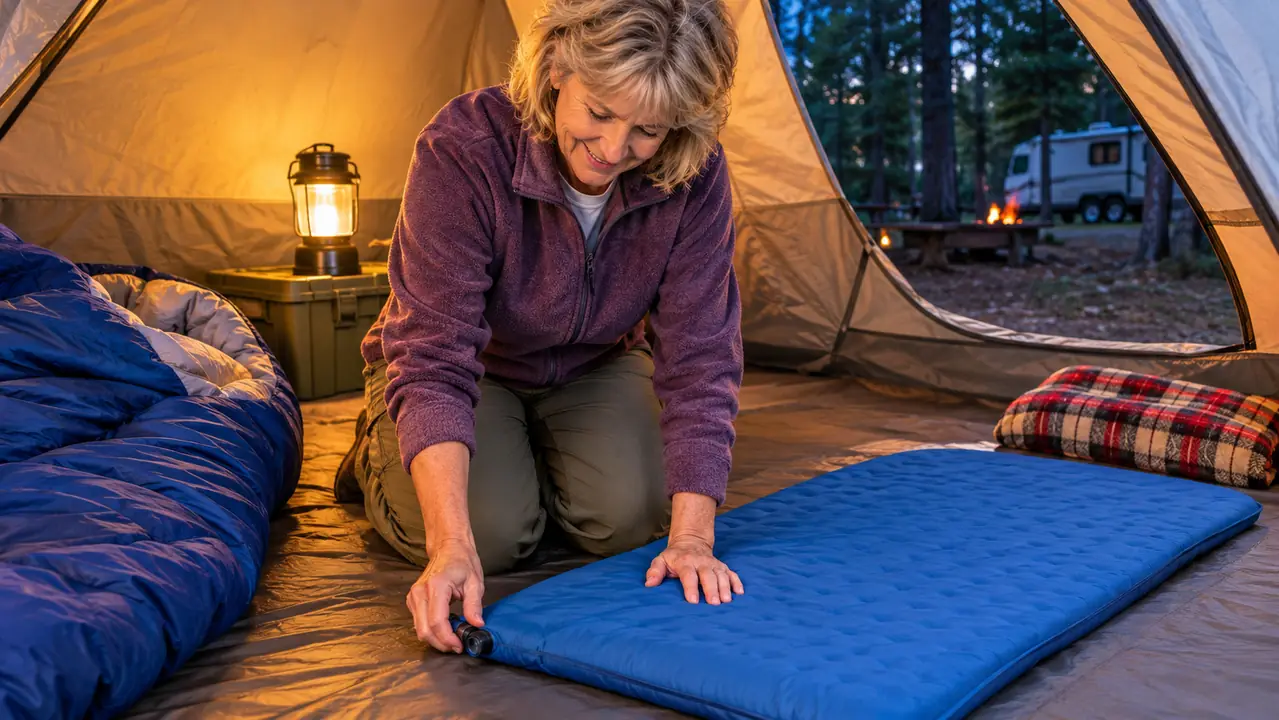
From stuff sack to sleep-ready in under five minutes
Unroll it, open the valve, and let it do the work. The foam pulls air in on its own while you go set up the rest of camp. I unroll mine first thing, before the tent is even pegged, and by the time the sleeping bag is laid out it is most of the way there. A few breaths into the valve top it off if I want it firmer. No pump, no cord, no hunting for the adapter that fits the car.
A 4.3 R-value core is the part your back notices at 3 a.m.
Air mattresses are cold. They are a large pocket of air sitting on ground that has been absorbing cold since October, and the air inside takes on that temperature. The Oxylus runs a hybrid foam core rated at 4.3 R-value, which is the number describing how well it resists heat moving through it. I will not quote you physics. I will tell you that in a tent in the Cascades in late April, my back is no longer the thing that wakes me up.
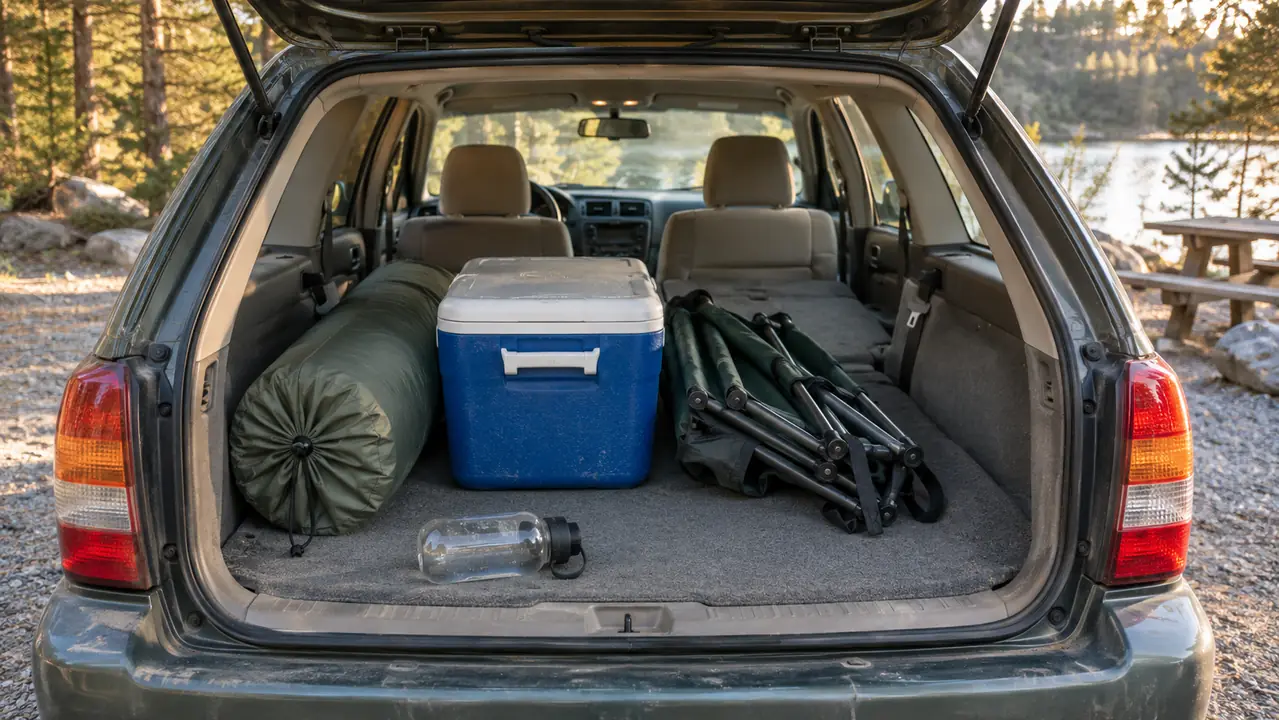
At 2.2 pounds it lives in the footwell, not the whole cargo area
Our old air mattress plus its pump took a third of the back of the car. The Gear Doctors pad weighs 2.2 pounds and rolls down small enough to sit in the footwell. This is not a backpacking claim, I am not carrying it up a mountain. It is a car claim. When everything has to fit alongside a cooler, two camp chairs, and a cattle dog who insists on the middle of the seat, the difference between a pump and no pump decides whether the folding table comes along.
Rectangular at 72 by 22 inches, so there are no rounded corners to roll off
Air mattresses are rounded at the ends. That reads like a nothing detail until you are the person on the outside edge. The Oxylus is rectangular, 72 inches long and 22 inches wide, sold as a single. An edge stays an edge. Juniper sleeps against my legs and I sleep near the border, and I have not slid off it once. I slid off air mattresses more times than I can count, always in the dark, always quietly so as not to wake Glenn.
No pump to forget and nothing to plug in
That is the entire point of self-inflating. There is a valve, you open it, and the foam does the rest. No battery pump that dies at midnight. No 12 volt cord that only reaches when the car is running. No hand pump that leaves you winded at the exact moment you wanted to be asleep. If you have ever driven two hours to a campsite and realized the pump is still on a shelf in the garage, you already know why this sits near the top of my list.
Medium firmness you can adjust at the valve, not a fixed setting
The Gear Doctors listing calls it medium, and medium is about right. What I like is that medium is not the only option. Open the valve and it softens under you. Close it early, before the foam has fully pulled in air, and it stays firmer. A couple of breaths firms it more. Glenn likes his side harder than I like mine, and we each get what we want from the same design without a discussion about it inside the tent.
It has survived a 42-pound dog walking across it
I want to be careful here. A self-inflating pad has foam inside rather than an empty chamber, and that makes it more forgiving than a vinyl air mattress when a dog decides to cross it. Juniper has walked on ours. She has also turned around on it twice before settling, which is her habit. Four seasons in, it still holds. The repair patch that came in the box rides in the stuff sack and I have not needed it. That is the honest version.
Water resistant is enough for a damp tent floor
The Oxylus is water resistant, not waterproof, and I think that is the correct claim for a sleeping pad. It handles condensation under the tent floor, a wet dog shaking off near the door, and the general damp of a Pacific Northwest morning. You are not going to float on it. What you avoid is the clammy feel of a bare air chamber under a sleeping bag that has taken on the moisture of everything around it by dawn.
The carry bag and repair patch come in the box
Small thing, but I have bought a pad that did not include the bag. Gear Doctors ships the Oxylus with a carry bag and a repair patch. The bag is a stuff sack with a drawstring and that is all I want from a stuff sack. The patch is the part I care about, because a pad with a hole in it is a large flat object you are hauling for no reason at all. Keeping the patch in the bag means it travels wherever the pad travels.
What I'd Skip
I would skip the instinct to buy the thickest pad on the page. At 1.5 inches, the Oxylus is thinner than plenty of what is sold now, and for car camping on a tent floor I have not found that to matter. If you are a committed side sleeper who needs a deep cushion, or if you want one surface for two people, this is a single at 22 inches wide and it is the wrong purchase for you. I would also skip it if your camping is mostly July and August and you only want something cheap under a bag. In that case an air mattress will do the job until it doesn't. The reason I changed over is the shoulder seasons, the cold ground, and the dog.
Two point two pounds, one and a half inches of foam under my hips, and no pump to forget at home. That is the whole argument.
Ten reasons, one pad, and nothing to plug in
72 by 22 inches, 1.5 inches thick, 2.2 pounds, 4.3 R-value hybrid foam core, rated to 250 pounds, medium firmness adjustable at the valve. Carry bag and repair patch included.
Amazon Check Today's Price on Amazon →