
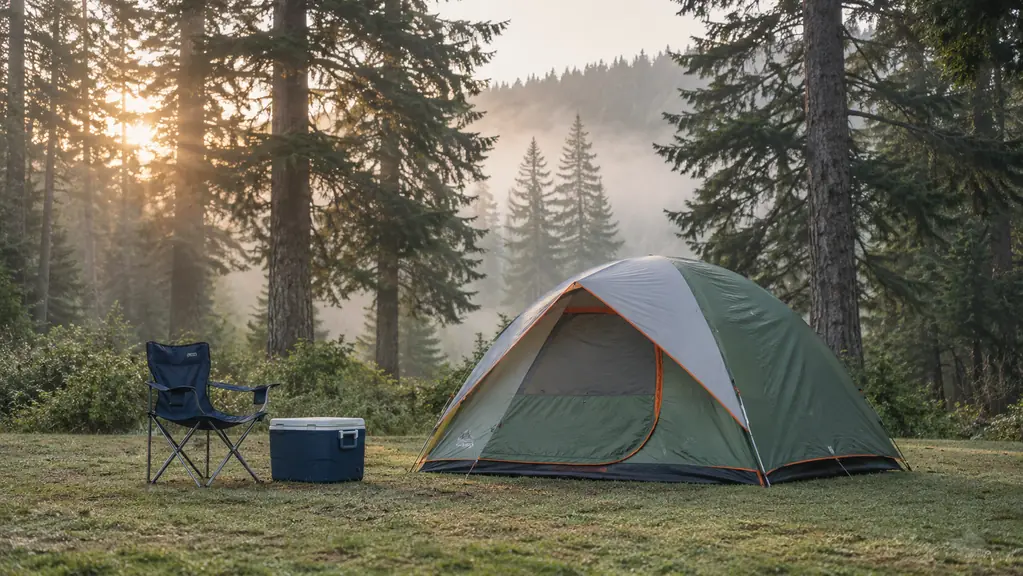
The Sundome is the tent everyone tells you to buy. It is the one stacked by the door at the hardware store, the one with more than twenty thousand reviews, the one your brother-in-law names the second you mention camping more than once a summer. So when I finally bought a Coleman Sundome, I did not need convincing that it was popular. I needed to know whether a tent that size and that plain would hold up to a wet weekend in the Cascades with a dog who believes every sleeping pad in the world belongs to her. Two seasons of weekends later, I have an answer, and it is more mixed than the star rating lets on.
Here is the short version before the long one. The Sundome is a good tent for a particular kind of camper and a frustrating one for a slightly different kind. If you drive to a campground, pitch in daylight, and sleep two to four people, it will do the job for years. If you backpack, if you camp into cold weather, or if you are setting it up alone in a crosswind, you will find its edges quickly. What follows is the detail behind that, including the parts the five-star reviews leave out.
The Quick Verdict
A roomy, weather-tested weekend tent for car campers, held back by a slow pitch and a door zipper that fights you after dark.
Amazon Check Today's Price →It is not the tent I would carry on my back. It is the one I keep packing on Fridays.
Drive-in sites, two adults, one dog, and a floor that has stayed dry through three proper rain events. Here is where to see today's price before your next weekend.
Amazon Check Today's Price on Amazon →How I've Used It
My husband Glenn and I camp most weekends from April through October, mostly drive-in campgrounds and state parks within a couple hours of Olympia. Everything rides in a 2017 Subaru Outback that has to hold the tent, the cooler, two camp chairs, a dog crate, and Juniper, our cattle dog mix, who is forty-two pounds of opinions. That is the whole use case. No alpine starts, no thru-hikes, no week-long base camps at altitude. One longer trip a year, usually the coast, and the rest is Friday evening to Sunday morning with a fire and a book.
The Sundome has been the tent for most of those weekends. It goes up in the same corner of the same sites we favor, the ones with a little shade and a flat pad. It has been through three proper rain events, one of them nine hours of steady drizzle, and a night of wind that took down a neighbor's canopy. It has also been through roughly forty ordinary nights with nothing happening at all, which is where most tents actually live.
What I can tell you is not lab data. It is what I noticed while kneeling in wet grass at seven in the morning, which is where tent reviews really get written. I do a little sewing on gear repairs, so I look at seams and stitching and how fabric folds when it is cold. That habit makes me a pickier customer than most, and it is why some of what follows is unkind.
What the WeatherTec System Actually Does
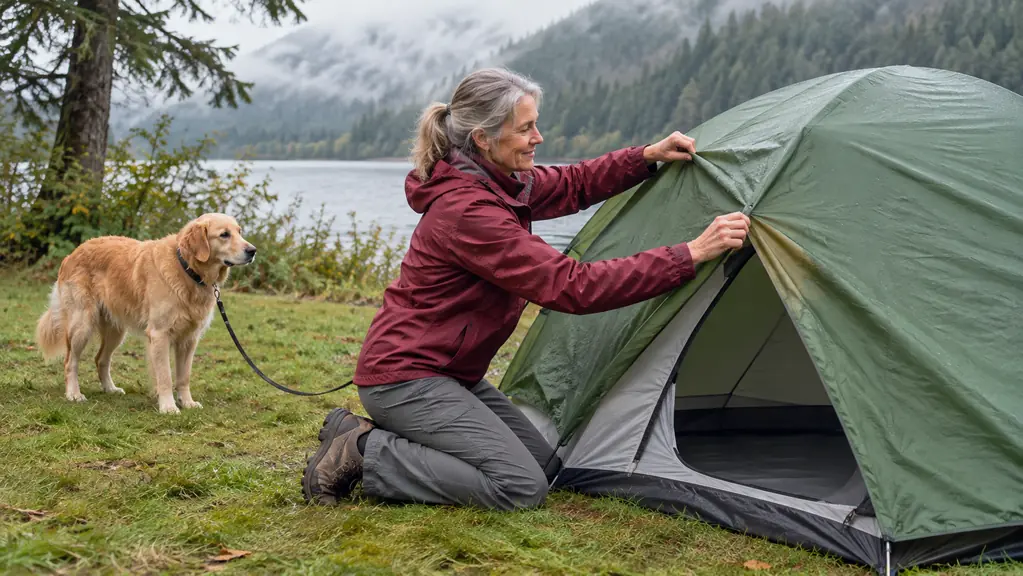
Coleman calls its water handling WeatherTec, and the tent ships with a rainfly included, which matters because plenty of tents in this size range make you buy one separately. The fly stakes out over the top and down the sides, and the ground vent at the base is meant to let air move up and out rather than sitting in the floor. In practice, on a night when it rained from ten until seven, I put a hand down on the floor at first light and it came up dry. That is the single most useful thing I can tell you about this tent.
The caveat is that the fly has to be on correctly. Ours was not, the first time. I had it pulled tight across the top and sloppy at the corners, and water ran down the inside of the wall and pooled in the low corner of the floor. That was my error, not the tent's, but it is worth saying plainly: this is not a tent that forgives a rushed fly in the rain. Take the extra three minutes and get the corners right.
The polyester body has held up better than I expected after two seasons of being folded and stuffed into the same bag. No pinholes, no seam separation that I have been able to find, and I have looked. The floor is the part I watch, because that is where a dog's nails do their damage, and it has taken forty-plus weekends of Juniper walking in circles before she settles without a puncture.
The Door, the Zipper, and a Dog With Her Own Agenda
Here is what nobody tells you about a big dome tent. The door is the whole relationship. Ours closes with a zipper and buckles back out of the way, and after dark, on your knees, with a headlamp pointed at the wrong part of the wall, that zipper catches at the bottom corner about one time in four. Not every time. Enough that I have learned to work it by feel instead of by looking.
This matters more with a dog than without one. Juniper does not wait politely at the threshold. She hits the door at a trot and expects it to be open, and a zipper that needs a second pass while a forty-two pound cattle dog leans on your leg is a small comedy that gets less funny every weekend. Glenn has taken to holding her collar. I have taken to opening the door earlier than I actually need to.
The tradeoff is that the same door is a wide opening once it is fully unzipped, wide enough to carry an air mattress through without a wrestling match. So the door is both the annoyance and the reason the tent is livable. I would not call it a design flaw. I would call it a design that assumed daylight.
It rained from ten until seven and the floor was dry at first light. That is the only test that matters, and this tent passed it.
Pitching It, and the Small Frictions Nobody Mentions
Setup is the part I would change. The tent is free standing, which I like, because it means you can get it standing and then walk it into position before you commit to anything. The poles are aluminum, Glenn holds the far end while I feed them through, and together we have it standing in maybe fifteen minutes at an easy pace, with the fly on.
Alone, it is slower. Not impossible, not a two-person-only tent, but slower. I have done it twice by myself, once in a wind that kept folding the far side back on me, and both times I was glad I had started early. If you are the person who pulls into the campground at dusk after work, this is the honest cost. The tent itself is simple. It is just large enough that one pair of hands has to keep walking around it.
The other friction is the footprint. At 100 square feet, it takes up real estate, and on a small pad you will spend a few minutes deciding which tree to work around. We have had sites where it fit fine on the first try and sites where we shifted it twice. That is not really a complaint. It is the size of the thing showing up in the physical world.
What Six Person Actually Means
Coleman rates this as a six-person tent with 100 square feet of floor area and a six-foot center height, and the listing notes that it fits two queen-size airbeds. All of that is accurate and none of it is the same as sleeping six adults. Six people in here means six sleeping bags edge to edge, no gear inside, and nobody standing up without stepping on somebody. That is fine for a family with kids who go to bed early. It is not fine for six adults who like their elbows.
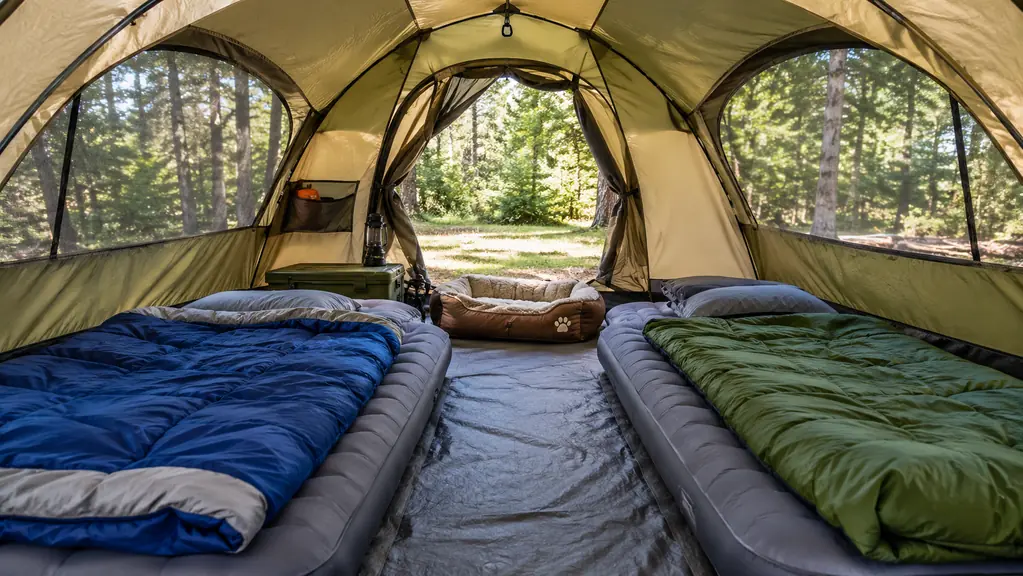
Two people and a dog, which is our version, is generous. Two queen airbeds plus a duffel plus a dog bed is comfortable with room to walk between them, and the six-foot center height means I can stand up to change clothes. At fifty-eight, getting dressed standing instead of folded over like a pocketknife is worth a good deal on a cold morning.
Four adults with gear is the realistic upper end. That is the number I would plan around if I were buying this for a group.
Ventilation, Condensation, and the Morning Damp
The tent has large windows and a ground vent, and the design pushes warm air up and out. On a warm night with the fly off and the windows open, it breathes fine. On a cool, still night with the fly on and everything zipped, you will get condensation on the inside of the walls. That is not a Coleman problem, that is a physics problem, and every tent I have owned does it. What matters is whether the damp reaches your sleeping bag. In our case it did not, as long as we left the vent open.
The lesson I would pass along is boring. Leave the ground vent open even when it is cold. Crack a window. Let the thing breathe and most of the morning damp goes away on its own.
Wind is the other half of this. Big flat walls catch a crosswind, and this tent does move in a gust. Ours held through a night that flattened a neighbor's canopy, but I was awake for part of it, listening. On an exposed site, take the time to stake it out properly. The tent will take weather. It will not take being half secured.
Care and Feeding, Two Seasons In
Two seasons in, the tent still fits in the bag it came in, which I did not expect. The trick is to fold it into thirds before rolling rather than wrestling it into a cylinder. I dry it over the porch rail after every wet trip, because polyester that gets put away damp comes out smelling like a basement. That is the entire maintenance routine and it has kept the thing usable.
The stakes that came with it are fine and I have not replaced them. The stuff sack has a tear at one seam that I sewed myself, which says more about the bag than about the tent. Nobody buys a tent for the sack.
What I'd Change If I Could
A better door zipper. That is the whole list, or nearly. I would also like the fly to be a little more forgiving of a sloppy pitch, but that is asking the tent to compensate for me, which is not a fair request. The zipper is the one thing I would genuinely redesign. On a tent this size, with a dog and a headlamp and a need to get out at two in the morning, the door should be the easiest part of the whole operation, and it is not.
The rest of my complaints are really about size and physics. Big tents take longer to pitch. Big flat walls catch wind. Any tent that keeps weather out will condense on a still night. None of those are Coleman's fault, and none of them would stop me buying this tent again. It is worth separating the things a manufacturer got wrong from the things a large tent simply is.
What I Liked
- 100 square feet of floor area and a six-foot center height, so you can stand up to change clothes
- Fits two queen-size airbeds with floor space left for a duffel and a dog bed
- The included rainfly kept the floor dry through a nine-hour rain
- Free standing, so you can position it before you stake anything
- Polyester body and floor have survived two seasons of dog nails and being stuffed into a bag
Where It Falls Short
- Fifteen minutes to pitch with two people, and noticeably longer alone or in wind
- The door zipper catches at the bottom corner, especially after dark
- Large flat walls catch a crosswind on exposed sites
- Condensation on cool, still nights if you close the vent and the windows
- More tent than a couple needs unless you are driving to the site
Who This Is For
This is a tent for people who drive to camp. If your site is at the end of a parking lot, if you sleep two to four people, if you want to stand up in the morning, and if you camp mostly in the warm half of the year, the Sundome does exactly what you need and asks very little of you in return. It is also a sensible first tent for a family, because it is forgiving of inexperience and easy enough to replace if a kid puts a pole through a wall. It suits a dog, provided the dog is not determined to test the zipper. And it suits the kind of camper who would rather spend the evening by the fire than spend it setting up.
Who Should Skip It
Skip it if you are carrying your shelter on your back. Nobody is hiking this in and nobody should try. Skip it if you camp in real cold, since it is a three-season tent and the condensation problem gets worse as the nights get longer and colder. Skip it if you regularly arrive after dark and set up alone, because you will come to resent the pitch. And skip it if you want a tent that quietly disappears into the background, because at this size it is the most obvious thing at the site.
If you camp out of a car, this is the one to look at first
Two seasons, three rain events, one dog, and a dry floor every time. See today's price and the current listing before your next weekend out.
Amazon Check Today's Price on Amazon →