
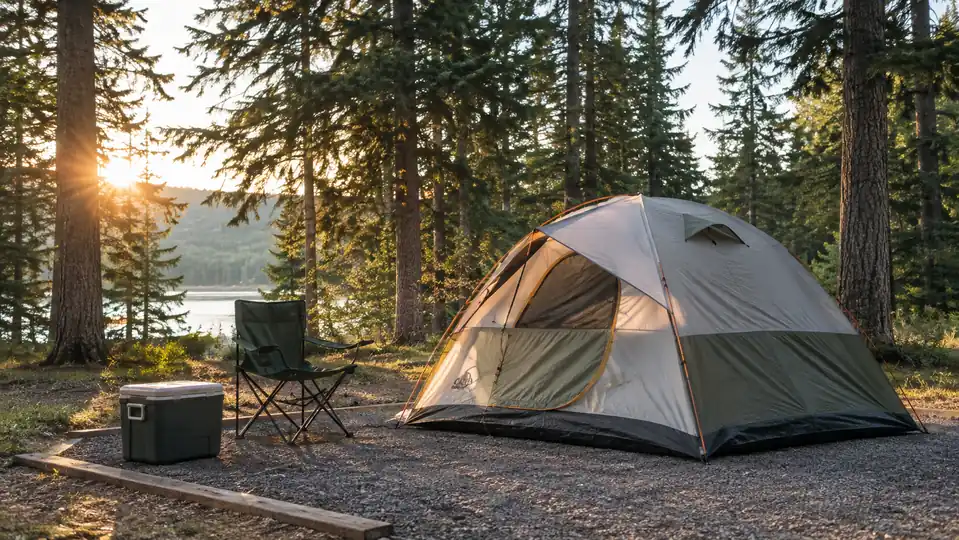
Short answer: the instant cabin tent wins the setup, and the Coleman Sundome wins the morning after. If you pull into a state park at dusk on a Friday with a dog who has been in the back seat since Tacoma, an instant cabin tent is a real kindness to yourself. If you want one tent still standing in its fifth season of shoulder-season drizzle, the Sundome is the better buy.
I have pitched the Sundome more times than I can count, mostly at drive-in campgrounds between Olympia and the coast, usually with my husband Glenn holding the cooler and staying well clear of the poles. Our dog Juniper is 42 pounds of claws and wet fur, and she has tested every floor and zipper in this house. We have put this tent up on gravel, on packed dirt, and once on a concrete pad at a private campground where the stakes would not go in and we had to tie off to the picnic table. What follows is what actually differs between these two tents when you are the one loading the car.
| Coleman Sundome | Instant Cabin Tent | |
|---|---|---|
| First-night setup | Two aluminum poles crossed at the peak, shell clipped on, rainfly over the top. About twenty minutes the first time. | Frame is pre-attached. Unfold it, push the roof up, lock the legs. Often under two minutes, in the dark. |
| Setup in year five | Same ten minutes every time. Nothing to remember, nothing to force. | Hinges stiffen, and the fold-back sequence has to be done in the right order. |
| Standing room | 6-foot center height at the peak, sloping away as you move off center. | Near-vertical walls hold their height out to the edges. |
| Floor area | 100 square feet, rated for six, fits two queen airbeds. | Typically less floor for the same packed size. |
| Rain and wind | WeatherTec system, rainfly included, listed as rainproof. The dome sheds water and handles a gust. | Flat roof panels pool water and catch wind. Fine in an ordinary summer shower. |
| Ventilation | Large windows and a ground vent push warm air up and out. | More mesh high up, which vents well and lets in a lot of morning light. |
| Frame repair | Aluminum poles, and a bent section can be swapped out. | A hinged frame is not meant to come apart in your hands. |
| Packing up wet | Shake it, stuff it, pitch it in the yard at home to dry. | Has to be folded precisely or the bag will not close around it. |
| Packed shape in the car | Long and thin, slides under the cargo floor. | Wider, flatter bundle that stacks instead of sliding. |
| Best for | Repeat campers, wet seasons, dogs, gear-heavy weekends. | Late arrivals, short fair-weather trips, anyone who needs to stand up. |
Where the Coleman Sundome Wins
The first thing I noticed is how little there is to break. Two aluminum poles cross at the peak, the shell clips on, and the rainfly goes over the top. There is no hinge assembly, no pre-attached frame folded into a bundle the size of a coffee table. When a pole section eventually dents, and one will, you replace that section and carry on. You cannot replace a hinge on an instant tent. When it stiffens, you learn to live with it or you buy a whole new tent.
Ours bent a pole section in its second season, at the ferrule, on a trip where I forced the second pole through before the sleeve was fully lined up. My fault, not the tent's. A replacement section arrived in a padded envelope and took four minutes to slide in, with Glenn holding the flashlight at an unhelpful angle and Juniper trying to get into the tent bag. That is the only repair this tent has needed in years of use. Compare that with a hinged frame. There is nothing to unbolt, no part number to look up, no way to buy the one piece that failed. When it goes stiff, it stays stiff.
Weather is the second thing. The Sundome is listed as water resistant and rainproof, with Coleman's WeatherTec system and the rainfly included in the box. Is it a mountaineering tent? No, and it does not claim to be. But a dome sheds rain because of its shape. Water runs off the curve instead of pooling on a flat panel, and the low profile handles a gust far better than a tall cabin with broad shoulders and a lot of sail area.
Floor space is the third. The Sundome is rated for six people with 100 square feet of floor, which in practice means two queen airbeds with a dog bed wedged between them, or two adults and a great deal of gear nobody wants to leave in the car overnight. The 6-foot center height lets me stand to change clothes, though it slopes away quickly once you step off center. Cabin tents hold their headroom out to the walls, and that is a genuine advantage. The Sundome simply gives you more floor, and floor is what you sleep on.
Where the Instant Cabin Tent Wins
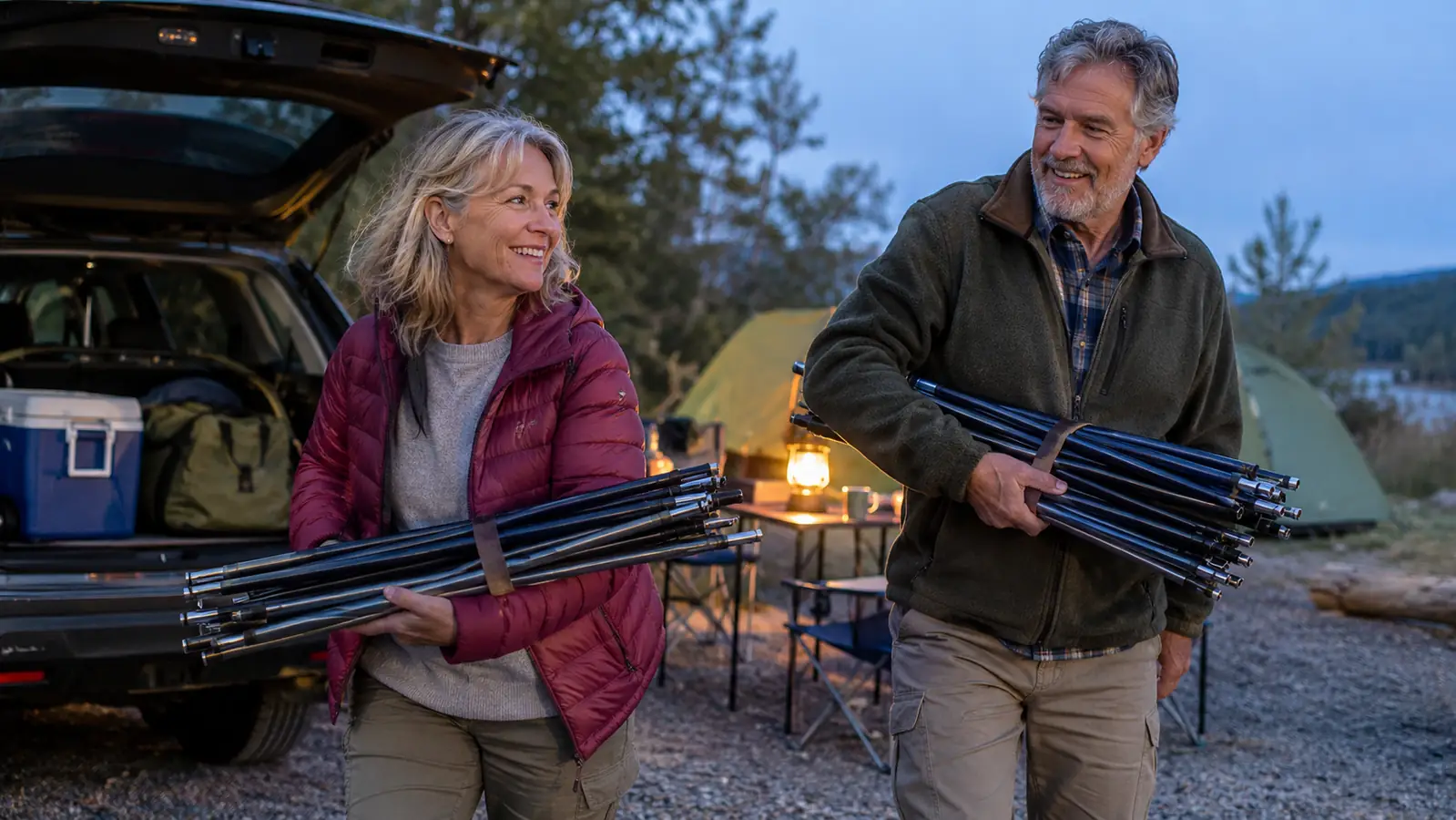
Setup, and it is not close on the first night. The frame is pre-attached. You pull the tent out of the bag, spread it, push the roof up, and the legs lock. Most people have it standing in under two minutes on the first try, in the dark, without reading anything. My first Sundome pitch took about twenty minutes and included some language I would not repeat in a family campground.
We pulled into Millersylvania one October Friday with about twenty minutes of daylight left. A family two sites over had an instant cabin up before I had the cooler out of the car. Their kids were inside it with a lantern while I was still unrolling the pole bag and looking for the second pole. I want to be honest about how that felt. It did not feel like a small difference. It felt like the difference between a weekend that starts on Friday and one that starts on Saturday morning, after the wood is wet and the good sites are gone.
The walls are the second advantage. A cabin tent runs nearly straight up from the floor, so the usable space is the space you paid for. You can stand anywhere inside it, not only in the middle. If you are changing out of wet clothes, or if someone in your party has a bad back and does not want to crawl in on hands and knees, that matters more than a few extra square feet of floor.
And I will concede the wind point before someone in the comments does it for me. A tall cabin with flat sides catches weather that a dome shrugs off. Most instant cabin tents handle an ordinary summer shower without drama. In a real blow, with rain coming sideways and the fly snapping, you will be glad of the curve.
The tent that is still standing in year five
Two aluminum poles, a rainfly in the box, 100 square feet of floor and a 6-foot peak. Ten minutes to pitch, about that long to learn, and nothing on it that stiffens up and quits.
Amazon Check Today's Price on Amazon →What the Six-Person Rating Really Means
Six-person is a marketing number, not a sleeping count, and it works the same way on both tents. Nobody wants to sleep six adults shoulder to shoulder. What the rating buys you is room to be a normal person in bad weather. On the Sundome, 100 square feet and a 6-foot peak means two adults, a 42-pound dog, two duffels, the cooler Glenn insists on bringing inside, and enough floor left to walk to the door without stepping on anybody.
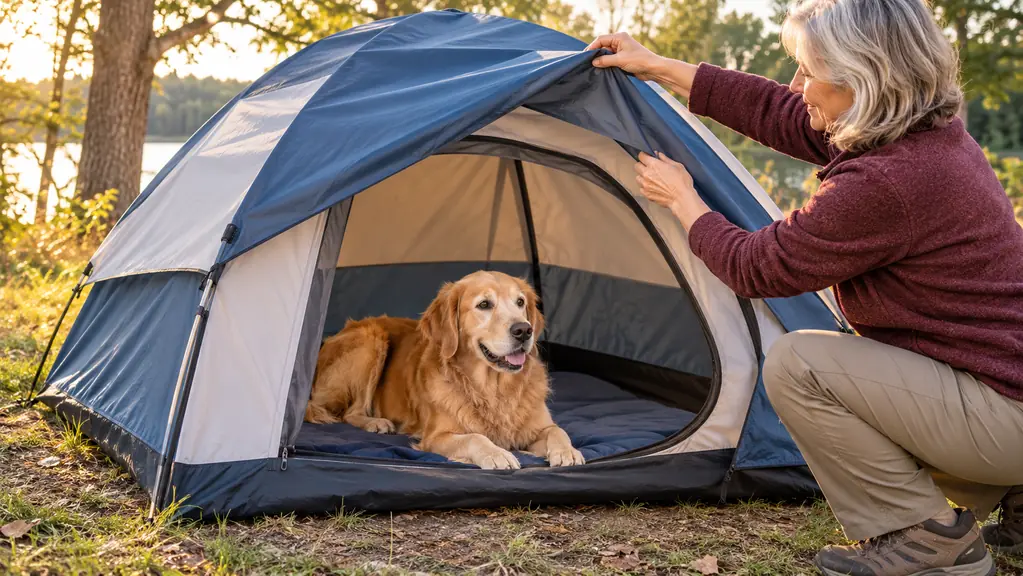
Two queen airbeds is the other honest reading of it. That is the spec sheet's own description and it is accurate, but two queens fill the floor wall to wall. If you want to stand up and move around, one queen plus two sleeping pads is the better arrangement, and Juniper will claim whatever gap is left. Plan for the dog. The dog always gets a bed.
Where the cabin shape earns its keep is in that same rainy-day test, and I have run that experiment. Standing height at the walls means you can sit in a real chair rather than on the floor, which for those of us past fifty is not a small thing. One wet Saturday at Cape Disappointment we spent four hours in a dome tent with a card game on a cooler lid, two camp chairs folded flat in the corner because there was no room to open them, and a dog who wanted out every twenty minutes into the rain. We were dry. We were also stiff and short-tempered by two in the afternoon. In a cabin tent you sit upright at a table and read a book while the weather passes.
Six-person is a marketing number. What it actually buys you is room to be a normal person in bad weather.
Ventilation, and Why It Matters More Than You Think
The Sundome's listing mentions large windows and a ground vent, and the point of a ground vent is that cool air comes in low, pushes the warm air up, and it leaves through the mesh overhead. In August, that is the difference between sleeping and lying there listening to your husband breathe. Coleman built this tent around moving air, which is what you want when two people and a dog are breathing in a closed box.
Here is the small thing we do that makes the vent actually work. We pitch with the ground vent facing the breeze, which on the coast means facing the water, and we leave the downwind window cracked a couple of inches all night. The difference in condensation on the inside of the shell is noticeable by dawn. Without it, everything in the tent is damp when you wake up: sleeping bags, pillow, husband. With it, the shell is dry and the bags are dry and the only wet thing in the tent is the dog, who went in the river at six in the morning.
Cabin tents often carry more mesh high up, which vents well and lets in a great deal of morning light. Set the two side by side on a hot afternoon and the cabin may well feel airier. Set them side by side in a cold rain and the dome's smaller openings keep the warmth where you put it. Neither is wrong. They were built for different weather.
The Part Nobody Mentions: Packing Up Wet
Taking a tent down in the rain is the worst part of camping and the part most reviews skip. A dome folds down to a long bundle. You shake it, stuff it, and the pole bag slides under the cargo floor of the Outback next to the dog's water bowl. If it is soaked, you stuff it soaked, drive home, and pitch it in the yard to dry, which takes ten minutes and one cup of coffee.
The last wet takedown we did was a Sunday at Rainbow Falls in a drizzle that had been going since three in the morning. I had the shell stuffed and the poles bagged in about eight minutes, in my boots, with the dog already in the car and the hatch up. Then I stood there for another twenty holding a tarp over the open cargo area while Glenn wrestled a friend's instant cabin back into its bag, because the frame kept wanting to open itself back up every time he got one corner folded. That is the honest trade. An instant tent is faster to put up and it asks for more care to put away.
An instant tent has to be folded back exactly so. The frame collapses on itself and the fabric has to be guided into the gap or the bag will not close. Do that in the wet, with cold hands, at the end of a weekend, and you will understand why some people love these tents and others list them for sale after one season. The setup is fast. The takedown is a procedure.
There is also the matter of the car. The Sundome packs long and thin, which is the shape that fits best in a wagon already loaded with a dog crate, a cooler and two camp chairs. An instant tent folds into a wider, flatter bundle that stacks rather than slides. Neither is a deal breaker in a 2017 Outback. One of them leaves more room for the dog to turn around.
Who Should Buy Which
Buy the Coleman Sundome if you camp more than a handful of nights a year, if your season runs into cold rain, if your dog's nails have defeated you, and if you would rather spend ten minutes with two poles than replace a tent every other spring. Ours has been through four seasons of Puget Sound shoulder weather and one August trip where it rained every night, and the inside stayed dry the whole week. It is also the tent I would hand a first-time buyer, because learning on a dome teaches you how a tent actually goes together.
Buy the instant cabin tent if your trips are short and mostly fair weather, if you arrive after dark, if standing up straight matters to your back, or if you camp with someone who will not tolerate a project at the end of a long drive. That is a legitimate set of reasons. It is a real trade, not a mistake.
One more thing, and then I will stop. If you camp with a dog who sleeps against the tent wall, look at the door on whichever tent you buy before you commit. A tall cabin door with a big panel is easier to get a wet dog through at midnight. The Sundome's door is a zipper and a buckle. It works. It is not generous.
Ten minutes a trip, five seasons of use
If you want the tent you stop thinking about, this is the one. Coleman's WeatherTec system, rainfly included, 100 square feet of floor, aluminum poles you can actually replace.
Amazon Check Today's Price on Amazon →