
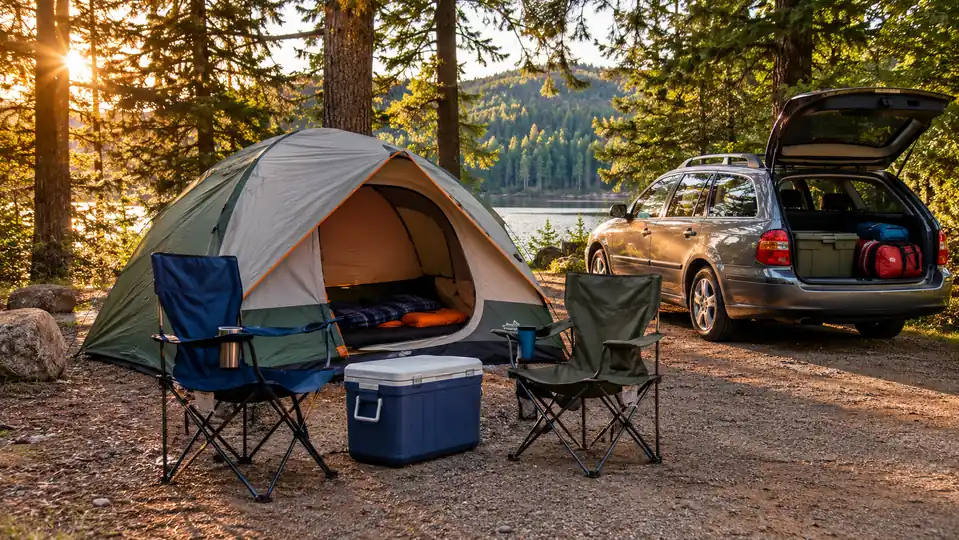
Glenn and I have one rule about camp setup: if the tent takes longer than the coffee, we brought the wrong tent. Our 2017 Subaru Outback is packed to the headliner most Fridays from April to October. Cooler, two sleeping bags, a duffel of fleece, a dog bed, and Juniper, our 42-pound Australian cattle dog mix, who is firmly convinced the cargo area belongs to her. The pads at the state parks we book are usually half gravel and half roots, and we roll in after work with maybe an hour of usable light. The Coleman Sundome, the six-person one, is the tent that keeps coming back out of the garage. Here is why it keeps winning.
To be honest about what this is. It is not a backpacking tent, and I would not carry it up a trail for anyone. It is a drive-in tent. You pull it out of the car, stand it up, and forget about it until Sunday. Ours has been through drizzle, one genuine downpour, a wind that came across the water at 2 AM, and six seasons of a dog who does not wipe her feet. What follows is the list in the order I would explain it to a friend in the camp store parking lot, standing next to the register with a bundle of firewood under one arm.
The Tent That Is Up Before the Coffee Finishes
Six person, 100 square feet of floor area, rainfly included, and a six-foot center height so you can stand up to change. It keeps earning its space in the car.
Amazon Check Today's Price on Amazon →It Stands Up Before You Open the Cooler
Freestanding is the word to look for, and it is the reason I stopped dreading arrival. The Coleman Sundome uses aluminum poles that feed through sleeves and then hold the tent body up on their own. Nothing has to be staked before the tent keeps its shape, which matters at a drive-in site where you are working around roots and a fire ring. Glenn is not allowed near the poles, so this is a two-handed job I do alone in about the time it takes him to get the cooler level. And when I get the door facing the wrong way, I pick the whole tent up and turn it.
100 Square Feet Swallows Two Queen Airbeds
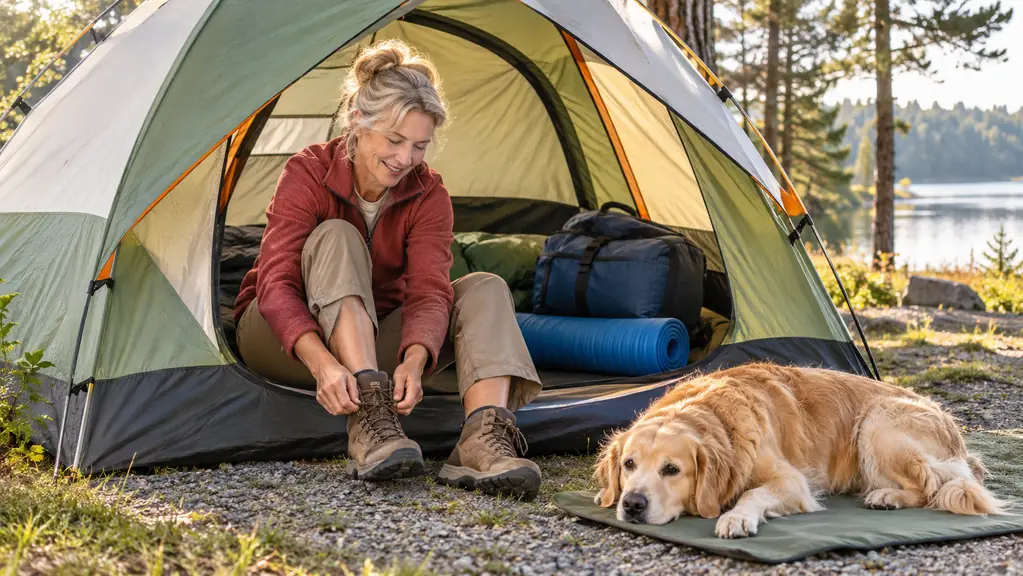
The listing says the floor area is 100 square feet and the interior fits two queen-size airbeds. I did not believe the second half until I watched Glenn inflate both of them inside the tent out of stubbornness. They fit, and there is still floor left along the walls for boots, a duffel, and Juniper's bed. That leftover floor is the actual point. On a wet afternoon when the three of us are stuck inside for two hours, nobody has to lie still and nobody has to climb over anyone to reach a book.
Six Feet of Center Height Means You Change Clothes Standing Up
The center height is six feet. I am five foot six, and Glenn is five foot eleven, and both of us can stand upright at the middle of the tent to pull on a fleece or peel off a wet shirt. If you have never camped in a tent where you had to do that folded over like a pocketknife, this will sound like a small thing. It is not a small thing at 6 AM in October when you are cold and stiff and the last dry layer is at the bottom of a bag.
The Rainfly Comes In the Box and Goes On First
The rainfly is included, which should be the bare minimum and somehow still is not on every tent in the aisle. I put it on before we walk to the bathroom, not after the first drops, because I have made that mistake and I am not making it again. Coleman calls its water resistance system WeatherTec, and the listing rates this tent water resistant and waterproof. What I can tell you is that a Pacific Northwest drizzle that turns into a real rain has not gotten through on our trips, including one night in a park outside Forks where it rained hard until 4 AM.
Windows and a Ground Vent Move the Hot Air Out
Large windows plus a ground vent at the floor. The vent pulls cooler air in low, the windows let the warmed air rise and leave up high, and the result is a tent that is merely warm at 3 PM instead of unusable. This is the difference between an afternoon nap and sitting in a camp chair under a tree, swatting at nothing. On a still August day you will still want the door open. But the vent does real work, and it is the feature I would miss most if I went back to a plainer tent.
It Still Leaves Room for the Cooler in a Loaded Outback
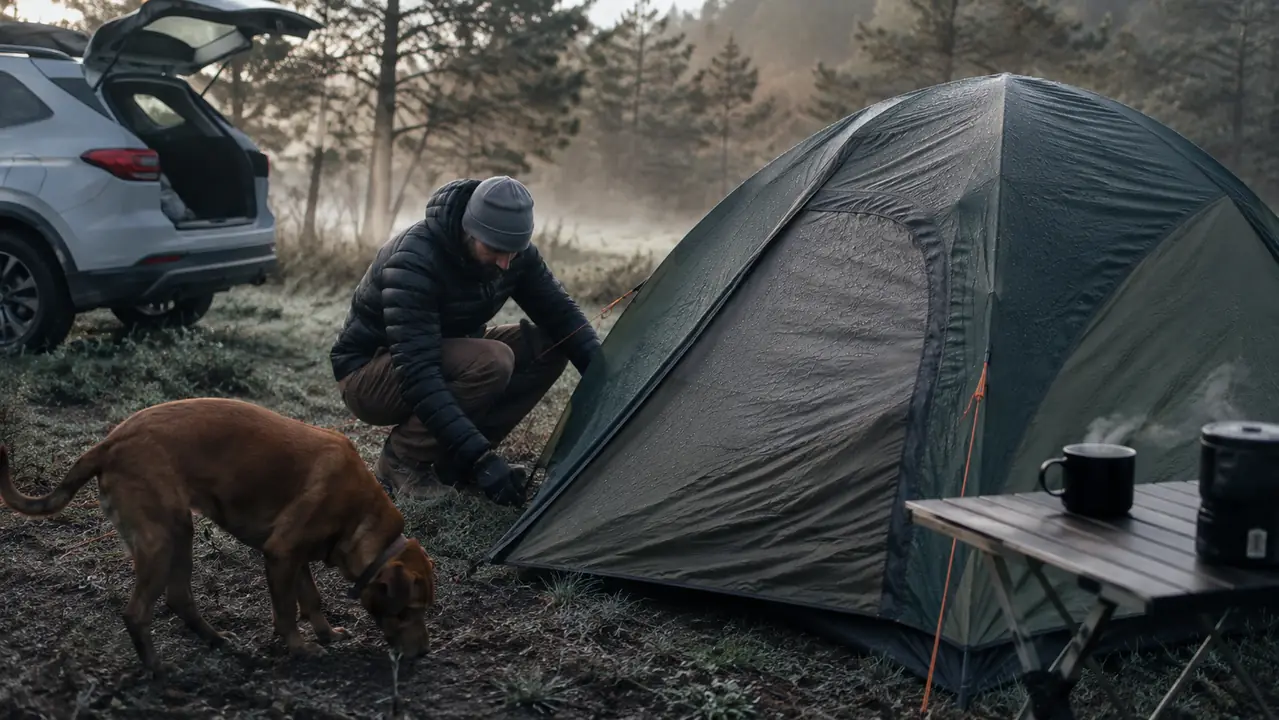
The Outback with the back seats folded is not a large vehicle once a cooler, a water jug, and a dog are in it. Everything we bring has to fit in one layer or the hatch will not close. The Sundome goes in as a bundle of poles and folded fabric along one side, and the cooler still slides in behind the passenger seat. That is the whole test, honestly. It fits, it comes out, and it goes back in on Sunday morning while still damp, without a wrestling match in the parking lot.
Buckles and Zippers You Can Work By Headlamp
The closures on this tent are buckles and zippers, and that is all I want. Buckles do not care about sand or pine needles. Zippers care about everything, so I keep the track brushed out with an old toothbrush from the sewing drawer and I do not force a pull that binds. What matters at 9:45 PM, with a headlamp between your teeth and a dog pushing past your knees, is that the pull is big enough to find by feel and the zip runs with one hand. This one does.
It Survives a Forty-Two Pound Dog
Juniper does not wipe her feet. She circles twice before she lies down, which means claws on the floor and along the lower wall every single night we camp. Six seasons in, the things I check each spring are the stitching at the corners and the floor seams, and I have re-sewn one small tear near the door with a curved needle and heavy thread. The fabric is polyester. It is tough and it is not indestructible, and I put a mat under her bed to be fair to it.
Three-Season Rating Covers April Through October
This is a three-season tent, which matches how we actually camp. Our season opens the first dry weekend in April and closes when the wood bin at home runs empty in October. Three season means rain, wind, and moderate cold. It does not mean snow load, and I would not ask it to hold a foot of wet snow on the roof. If your trips run into real winter, this is not the tent and you should not talk yourself into it. For our calendar, the rating is exactly right and nothing is wasted.
It Handles a Site With No Shade
Half the sites we book have no shade until suppertime, and the listing gives this tent UV protection. I noticed it on a July afternoon at a lake campground where the tent sat in the open from noon on. It was warm inside, but the fabric was not baking through the way our old tent did, and the interior stayed usable for a nap. It is not a canopy, it will not make a hot day pleasant, and a tarp over the top is still the better answer. It just takes the edge off a bad site assignment.
What I'd Skip
Two things I would skip. First, buying up a size for guests who maybe come once. A larger tent is a colder tent and a longer setup for two people who mostly camp alone, and a six-person tent already gives us more room than we use. Second, I would skip any tent whose rainfly is sold separately. That is a cost you discover in the rain, at night, with the directions in the car. What I would keep is boring: a freestanding dome, aluminum poles, a rainfly in the box, and a floor big enough that the dog can stretch out without touching anyone. That combination is why the Coleman Sundome keeps coming out of the garage season after season.
Two queen airbeds, side by side, with floor left over for three pairs of boots. That I can picture. One hundred square feet means nothing to me until I am standing in it.
Pack It Friday, Sleep In It Friday
Six person, 100 square feet of floor area, rainfly included, six-foot center height, aluminum poles. Six seasons in our garage and it still goes up before the coffee is ready.
Amazon Check Today's Price on Amazon →