
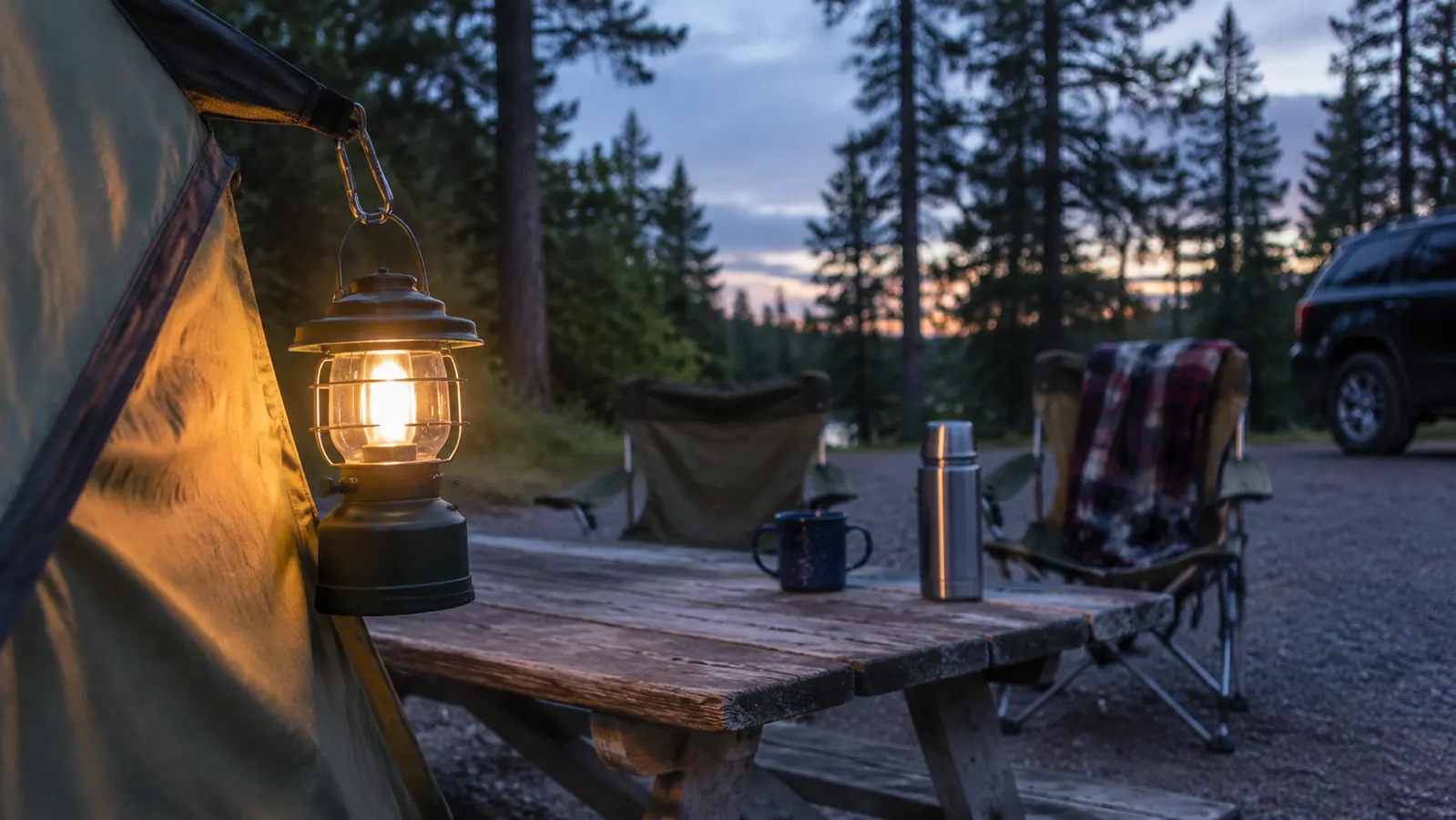
The first thing nobody tells you about the Lepro 1000LM LED Camping Lantern is that the big number on the product page is not the number you will live with. The second is that it is a plastic lantern, and it feels like one in your hand. The third is that neither of those facts has kept it out of my car. It has ridden in the back of a 2017 Subaru Outback, wedged next to a cooler and a dog, on more weekends this season than any other light we own.
I am Marla. I am 58, retired from a school library, and I camp most weekends from April through October at drive-in campgrounds and state parks around western Washington, plus one longer trip a year. Glenn, my husband, handles the cooler and the fire and is not permitted near the tent poles. Juniper is our 6-year-old cattle dog mix, about 42 pounds, and she believes every sleeping pad is hers. Everything we bring has to fit in that Outback with the two of them, so I have gotten fussy about gear that takes up room without earning it. This lantern earns most of its room. Not all of it. Here is the honest version.
The Quick Verdict
A genuinely bright, genuinely simple rechargeable lantern for a picnic table, with a plastic body and the words water resistant doing quiet, honest work in the fine print.
Amazon Check Today's Price →Bright enough to cook by, plain enough to trust
1,000 lumens at maximum, a 360 degree beam, a hook at the top and another at the base, and a rechargeable battery that ships in the box. If you want one table lantern for weekend camping, this is the one I keep reaching for.
Amazon Check Today's Price on Amazon →How I've Used It
I am not a backpacker and I am not going to pretend otherwise. My camping is drive-in camping: the car is twenty feet away, the cooler has a handle, and the heaviest thing I carry is a cast iron pan I refuse to leave home. That matters for a lantern review, because a lantern's job changes completely when you are not carrying it on your back. Mine lives on a picnic table, hangs from a tent loop, and gets carried to the vault toilet at 2 a.m. by a person holding a dog leash in her other hand.
Our camp is simple. Two chairs, a two-burner stove, a tent that takes us longer to put up than it should, and a plastic tote that holds the fuel, the matches and the lights. The Lepro lantern went in that tote as a backup to a battery lantern we had owned for years. Within a month it was the first light out of the bin and the old one was staying home to save space.
The routine never changes. I charge it at home midweek, unplug it Thursday night, and drop it in the tote. It gets used for dinner cleanup, for cards after dark, and for the walk down the loop when the light at the washhouse is out again. Then it goes back in the tote Sunday morning. Nothing about it has surprised me in a season of use, which in camping gear is about the highest compliment I have.
There was one Saturday in late September that sums up how we actually use it. We pulled into a state park off the highway well after the light was gone, which is what happens when you leave Olympia at four and stop for ice on the way. Glenn held the leash and the flashlight and I dug through the tote by feel. The lantern came out third, after the matches and a bag of kindling. I hung it off the hook on the bear box lid and we had a table, a stove and a place to sit inside of ten minutes. I have set up camp by the light of a phone more times than I care to count, and I spent most of that dinner thinking about how much swearing I had skipped.
What 1,000 Lumens Actually Looks Like
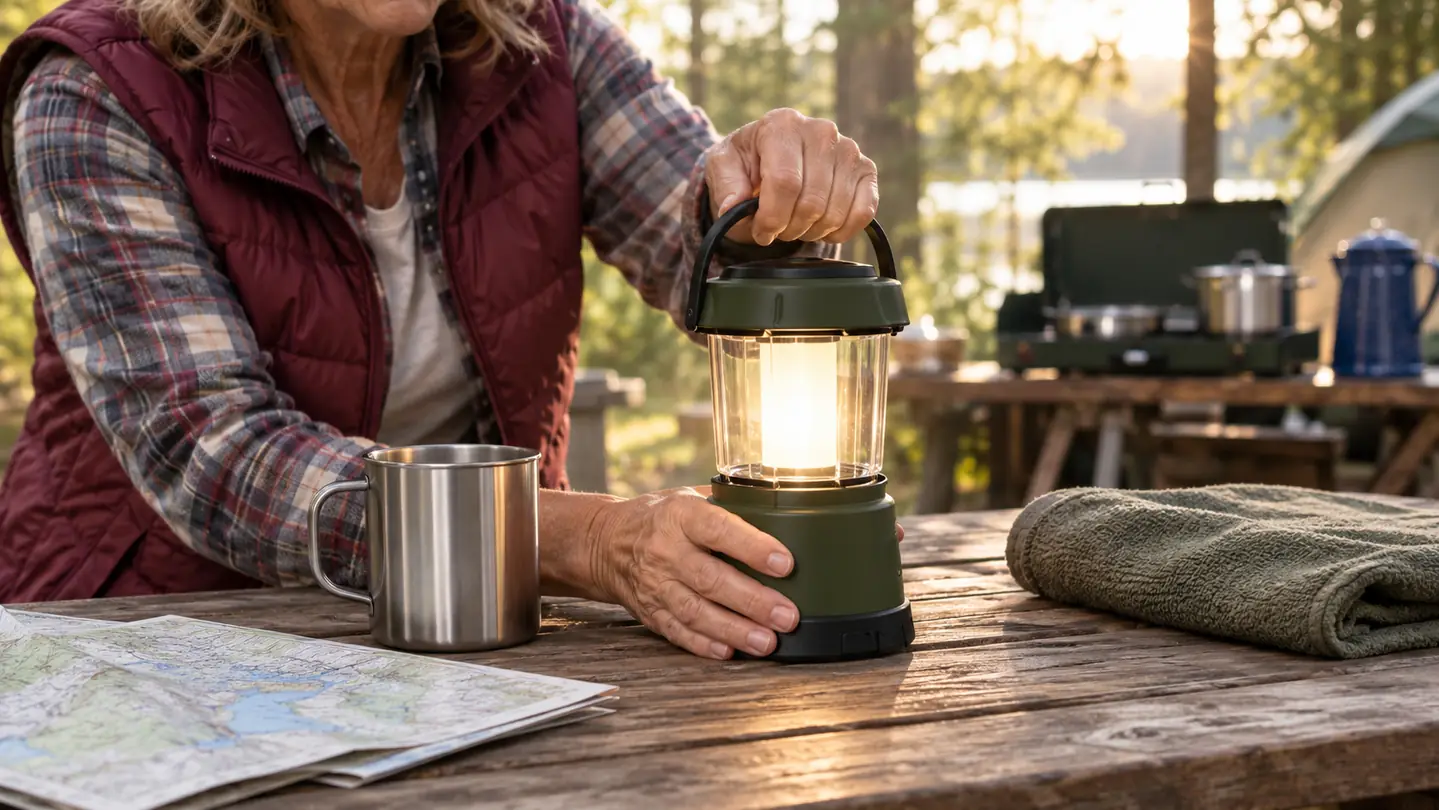
The specs list 1,000 lumens at maximum output, two light sources, and a 360 degree beam angle. On a picnic table at dusk that reads as a whole pool of light rather than one hot spot. I can see the bottom of the cooler, the cutting board, and the dog's face at the same time, which is more than I could say for the flashlight on my phone or the old battery lantern it replaced.
The 360 degree angle is the part I would underline. This is not a spotlight. It does not throw a tight beam down a trail, and if you point it at the woods you will light the woods, badly, from about eight feet. What it does is fill a small area evenly, which is what a campsite actually needs after dark. For the walk to the bathroom I still take a headlamp, and I would take one even if this lantern were twice as bright.
I ran a crude test in the yard the week it arrived, because I am the sort of person who does that. Full dark, lantern on the picnic table, and I walked the edge of our little camp to see where the light gave out. It reached the chairs, the stove, the cooler lid and the dog's water bowl. It did not reach the woodpile twenty feet off, and it did not reach the trailhead sign at the edge of the lot. If you have ever set a lantern down and then had to walk toward it to read a label, this one saves you the trip. That is the whole of the 1,000 lumen claim in real terms, and for cooking it is enough.
Brightness has a cost and the cost is battery. The listing quotes 12 hours and then says, in the same breath, that runtime depends on your brightness needs. That is the honest way of saying the 12 hour figure is a ceiling and not a promise. Set your expectations there and you will be fine. Expect twelve hours of full output on a cold night in October and you will be standing over a dim table wondering what happened.
The Battery Math Nobody Puts on the Box
The Lepro is rechargeable, runs on lithium ion, and ships with two batteries included. Rated runtime is 12 hours. The light source is rated at 4.55 watts and the unit is listed at 9 watts. In practice, that covers two full evenings of dinner, dishes and cards with room to spare, and it does not cover a four day trip without a top-up somewhere in the middle.
My system is unglamorous and it works. I charge it at home before we leave. I bring the charging cable it shipped with, coiled in the same bag as the stove lighter so I do not have to hunt for it. If we are out more than two nights, I top it up in the car on the drive between trailheads. I have never run it dead. I have run it down to where the output visibly sagged, on a night when we left it burning for six hours while three of us argued over a crossword.
Last August we did three nights at a campground outside Forks, which is about as grey and wet as a Pacific Northwest summer gets. I charged the lantern Thursday morning at home. It did dinner Thursday, breakfast Friday, dinner Friday, breakfast Saturday, dinner Saturday, and the reading afterward on all three nights. Sunday morning it was still going at visibly reduced output, but it was going. That is close to what the 12 hour ceiling predicts if you are not running full brightness the whole time. What I did not do was leave it on all night, and I would not. There is no reason to light an empty table at three in the morning, and it buys you nothing but a dead battery on Sunday.
Here is the part that gets left off the product page. A weekend has two evenings and a dark morning at each end of it. You will use this lantern more than the hours suggest, because it gets turned on at 5 p.m. in September and it does not go off until you go to bed. If you are the sort of camper who wants to set a light and forget it until Sunday, this is plenty for a weekend. If you are going out for a week with no power source, you should be planning charges, not counting hours on a spec sheet.
Twelve hours of light sounds generous until you remember that a weekend has two evenings, and a dark morning at both ends of it.
Where It Falls Short
The body is plastic. The material spec says so and the 550 grams in your hand agrees. I have knocked it off a picnic table onto gravel twice, and it survived both times with a scuff and nothing worse. I would not test it on rock, and I would not count on it outlasting a metal lantern that costs more. If you want something that feels like equipment rather than gear, this will feel light to you in the way that reads as cheap to some people.
A note from someone who sews. I have repaired enough gear over the years to know where cheap construction shows up, and it shows up at the joints and the hang points. The seams on this lantern are molded rather than stitched, which is the right call for a plastic body and means there is no thread to fray and no needle to reach for. What I watched instead was the hook itself, because a hook carrying 550 grams of swinging weight every night is the part that fails first on any lantern I have owned. After a season there is no play in it and no cracking around the molding. That is one data point, not a lifetime guarantee, but it is a better one than I expected from a lantern this plain.
Water resistance is rated as water resistant, not waterproof. That distinction matters out here, where a dry weekend is a gift and a drizzle is a Tuesday. I have had it out in light rain with no trouble at all. I have not left it sitting in a puddle overnight and I would not. If you camp where the rain comes sideways, hang it under the tarp and treat the rating as a margin, not a license.
The last honest note is about other people. At full output this is a great deal of light, and on a loop where the next site is twenty feet away, a lantern that fills your whole table also fills your neighbor's tent. We angle it down over the table, keep it off the bench facing the road, and shut it off when we turn in. That is not the lantern's fault, but it is something nobody mentions when they hand you a thousand lumens.
What Nobody Tells You About Hanging It
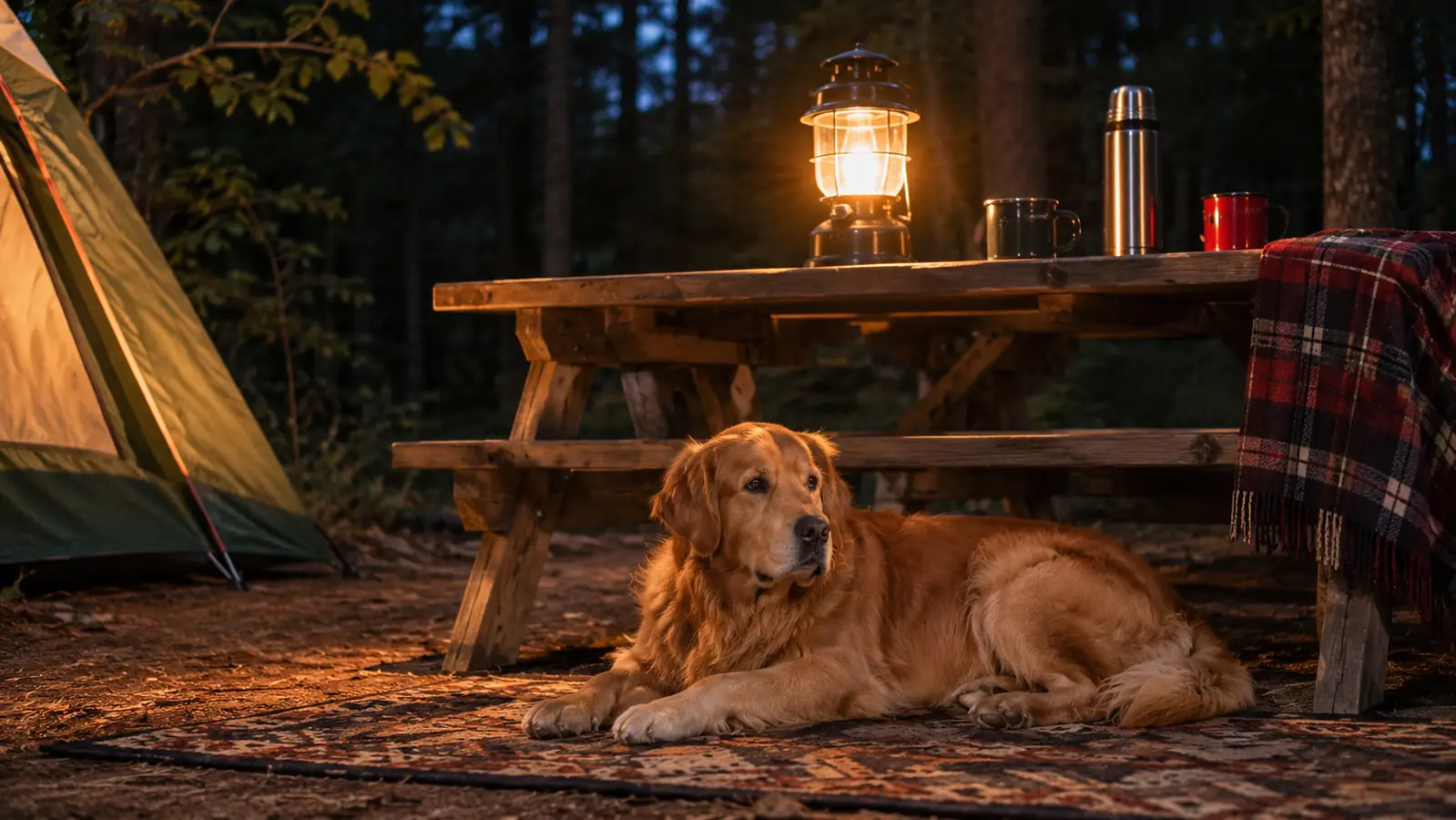
The listing mentions a hook on the top and a second hook at the base, and it lists ceiling mount as the mounting type. That second hook is the detail I use most. Hanging from the top hook puts the light above eye level and well out of the reach of a dog who investigates everything. Hanging from the base hook lets you hang it the other way up, which matters when the only branch at the right height is lower than you would like.
Inside the tent, I hang it from the top loop and it lights the floor evenly from wall to wall. That is the 360 degree beam earning its keep. There is no dark corner to change clothes in and no single bright spot to blind yourself with at 5 a.m., which is a trade I will take every time. The 550 grams hanging from a tent loop has not bothered the tent, the loop, or the pole one bit.
The height question is the one I got wrong first. My instinct was to hang it as high as it would go so the light would spread, which is fine outdoors and wrong inside a tent. Up high, it is in your eyes every time you sit up on the pad, and at 5 a.m. that is a miserable way to wake. What works better is hanging it at roughly chest height on the wall loop and letting the base hook tilt it slightly toward the floor. Juniper, who considers the sleeping pad her personal property, has bumped into it twice in the night. It swung, it settled, it stayed lit. Glenn has stopped asking me where the lantern is, which is the real sign a system works.
The one thing to think about is that a lantern on a hook wants to swing. Hung from a branch on a breezy night it moves, and the shadows move with it, and after an hour of that you will want it still. Tie it off or hang it close to the trunk and the problem disappears. It took me a full weekend to stop noticing it, which tells you how small a complaint it is.
What I Liked
- 1,000 lumens at maximum output with a 360 degree beam that lights a whole picnic table evenly
- 12 hours rated runtime on two included lithium ion batteries, rechargeable, no disposables to buy on the way out of town
- A hook at the top and a second hook at the base, so it hangs upright or inverted depending on what is overhead
- Rated water resistant, and it has handled light Pacific Northwest rain without complaint
- 550 grams of simple plastic that has survived two drops onto gravel
Where It Falls Short
- Plastic body, and it feels like plastic in the hand
- Water resistant is not waterproof, so it needs shelter in real weather
- The 12 hour figure is tied to brightness, and full output will not get you there
- No beam for walking a trail after dark, which means packing a headlamp anyway
- At full output it is more light than a quiet campground wants
Who This Is For
This is for the drive-in camper who wants one light on the table and does not want to think about it again. If you camp in a tent at a state park, cook outside, eat outside, and read for an hour before bed, the Lepro covers all of that with a hook and a battery and nothing to configure. It suits people who are done with lanterns that eat four D cells a season, and it suits anyone packing a small car where a bulky lantern costs them something else they wanted to bring.
Who Should Skip It
Skip it if you need a light for walking, because this fills a room and does not throw a beam. Skip it if you camp in serious weather and want something you can leave out in the rain without a second thought. Skip it if you are backpacking and counting ounces, since 550 grams is a lot of weight for a light you could replace with something a third the size. And skip it if you want gear that feels like a tool in the hand, because this is honest plastic and it does not pretend otherwise.
One lantern, one hook, one less thing to think about on Friday
Twelve hours rated, 550 grams, water resistant, two hooks, and two rechargeable batteries in the box. The Lepro has earned its spot in the tote.
Amazon Check Today's Price on Amazon →