
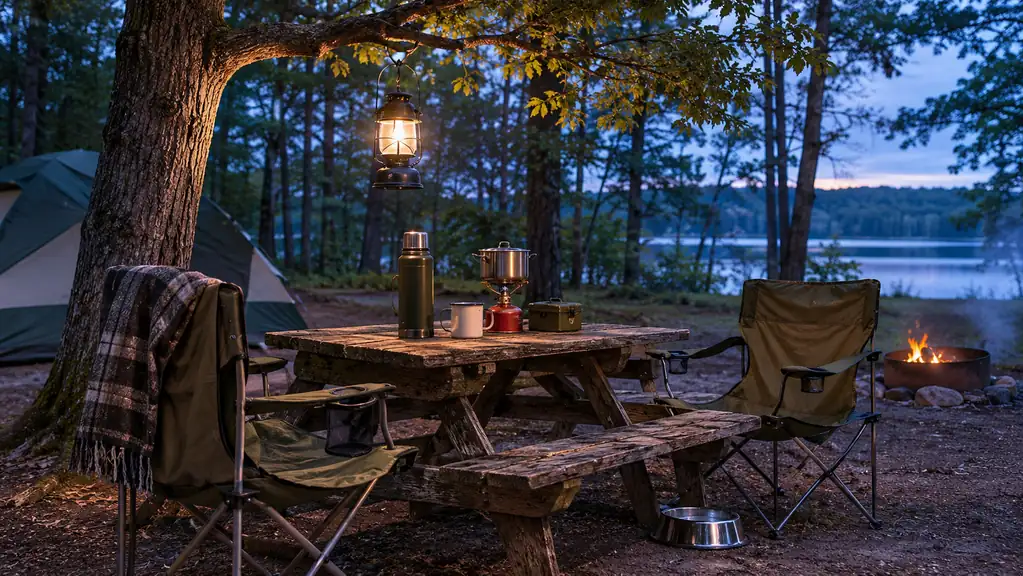
Short answer: for the camping my husband and I actually do, the Lepro 1000LM LED Camping Lantern is the one that lives in the car. A propane lantern is a fine thing on a cold night when the fire is going and nobody has to be anywhere in the morning. It is not the light I want while I am unloading a Subaru in the rain at seven in the evening. Those are two different jobs, and only one of them happens most weekends.
I am Marla Quist, 58, retired from a school library, and I camp most weekends from April through October, mostly drive-in campgrounds and state parks in western Washington, plus one longer trip a year. Glenn, my husband, handles the cooler and the fire and is not allowed near the tent poles. Juniper is our six year old cattle dog mix, about 42 pounds, and she believes the back seat of the Outback is hers. Everything we bring has to fit in that car with her in it. That single constraint answers more gear questions than any review I could write, and it answers this one.
Here is what made the decision for me. The Lepro runs on two included lithium-ion batteries, recharges from a 5 volt source, and puts out 1000 lumens across a 360 degree beam angle. It weighs 550 grams, roughly the weight of a hardback book. It has a hook at the top and a second hook at the base, so it hangs from a tent loop, a tarp grommet, or a branch without a length of paracord and a bad word.
What follows is not a laboratory test. It is four seasons of weekend camping, one propane lantern that has been in the family longer than the dog, and a fairly settled opinion about which one I would replace first if both disappeared from the garage tomorrow.
| Lepro 1000LM LED | Propane lantern | |
|---|---|---|
| Light spread | 1000 lumens across a 360 degree beam angle, so the whole table is lit | Bright at the mantles, softer toward the edges of the table |
| Power | Two included lithium-ion batteries, recharges from a 5 volt source | A disposable propane canister, plus the spares you remembered to pack |
| Packed size | 550 grams, plastic housing, no glass to wrap in a towel | Lantern plus fuel canister plus a tin of mantles |
| Inside a tent | No flame, no fumes, hangs from the loop at the top | Never. Carbon monoxide is not a calculated risk worth taking |
| Setup | Hang it and turn it on | Tie on mantles, burn them in, wait, then light it |
| Cold weather | Battery capacity drops when the temperature heads toward freezing | Keeps burning and throws real heat at your hands |
| Away from an outlet | 12 hours per charge, then it wants a 5 volt charger | Runs until the canister empties, then you swap in a spare |
| Warmth and glow | Bright, even working light with no heat at all | A soft hiss and light that moves, the smell of every campsite I have known |
Where Lepro Wins
The light goes all the way around. A 360 degree beam angle means the lantern lights the whole picnic table rather than one cone of it. That sounds like a small thing until you are sorting a first aid kit at nine at night with a flashlight in your teeth. Set the Lepro in the middle of the table, or better, hang it, and the salt shaker and the bug spray and the deck of cards are all lit at once.
Packing is the other half of it. 550 grams, a plastic housing, no glass to wrap in a dish towel. It drops into the outside pocket of the duffel and I stop thinking about it. The propane lantern takes a canister, usually a spare canister, and a little tin of mantles, and between them they claim a corner of the cargo area I would rather give to Juniper's bed. When you pack a car with a dog in it, volume matters more than weight.
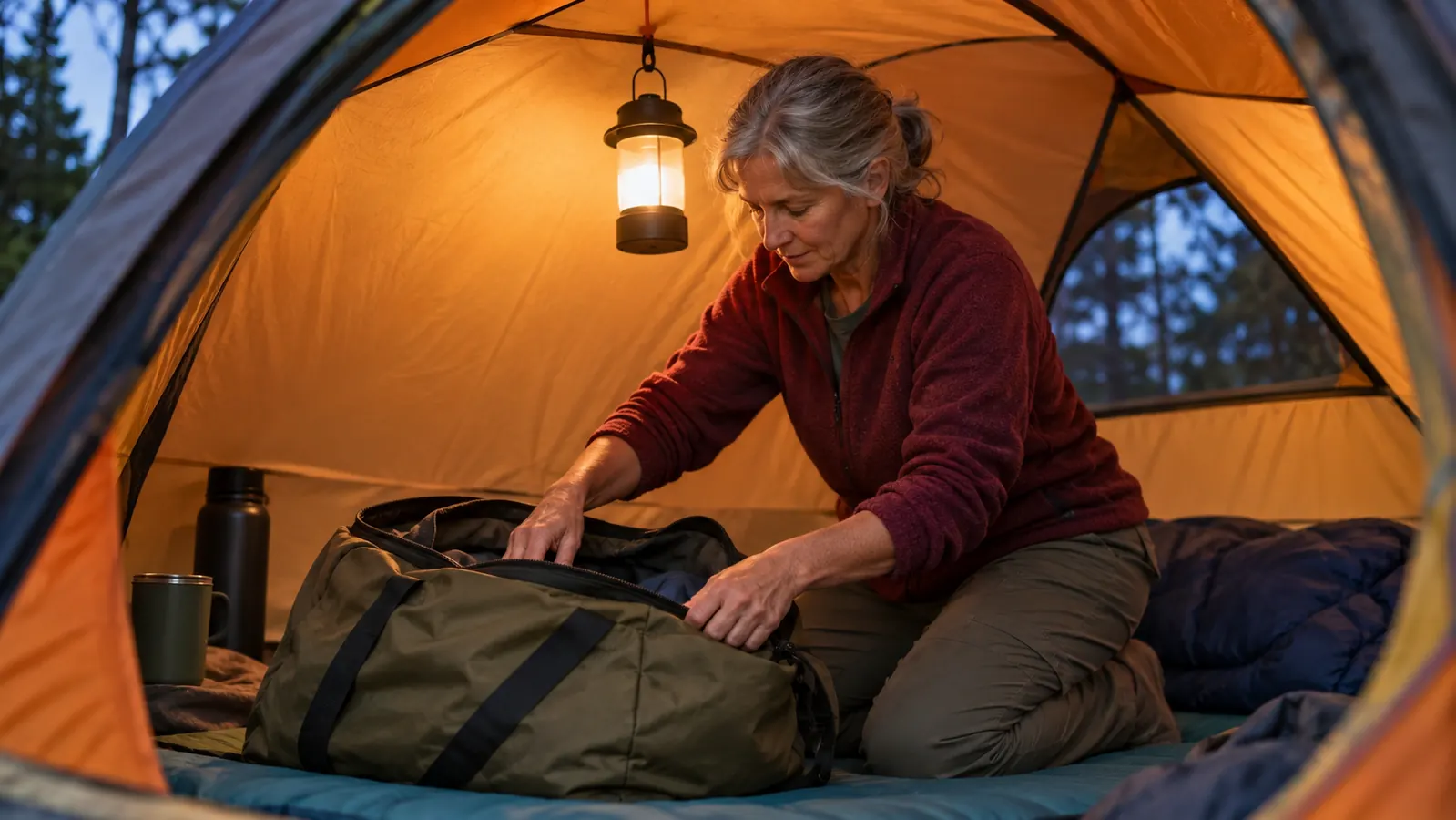
It can come inside. If it is raining sideways and we are eating dinner in the tent like a pair of damp raccoons, the Lepro comes in with us and hangs from the loop at the top. The propane lantern stays out in the rain. That is not fussiness on my part. A propane lantern burning in a closed tent produces carbon monoxide, and the ventilation you improvise with a zip tie does not make that a good plan.
Twelve hours of light per charge is more than we use in a weekend. Lepro rates the battery at 12 hours and notes that runtime depends on how bright you run it. In practice that covers a long evening of cards and the two in the morning trip to find the dog's water bowl, and a 5 volt charger in the car handles the rest on the drive home.
The lantern I reach for is the one that weighs 550 grams, hangs from either end, and does not need a match.
Where a Propane Lantern Wins
Cold. I will not pretend otherwise. Lithium-ion batteries shed capacity as the temperature drops, and a night that dips below freezing is exactly when you notice it. Propane does not care. It burns, it throws real heat, and standing next to one at six in the morning in October with frost on the table and both hands out is one of the small pleasures of shoulder season camping. If your trips run late into the fall, or you camp in the mountains in June, that is not a trivial advantage.
Fuel beats outlets when you are away from the car. On a four day trip with no power, a propane lantern keeps working as long as you packed another canister. The Lepro needs a charge eventually, and if the car is a mile down the road, that charge is the thing you will be thinking about over dinner.
And the glow. A gas lantern makes a campsite feel like a campsite. There is a soft hiss and the light moves a little, and nobody has ever called an LED cozy. The propane lantern is atmosphere. The Lepro is a tool. Most nights I want the tool, but I understand the other argument completely.
The Light That Hangs Anywhere and Needs No Mantles
1000 lumens, a 360 degree beam, two included lithium-ion batteries, and a hook at each end. 550 grams in the bottom of the duffel.
Amazon Check Today's Price on Amazon →The Mantles, and Other Small Misery
Nobody warns you about mantles. They are little mesh socks that tie onto the burner, and they arrive soft and then turn to fragile ash the first time they burn. Look at one wrong and it crumbles. So you carry spares. You learn to tie them on in the dark with cold fingers while your husband holds a flashlight at the wrong angle. You also learn not to touch the glass globe until it has cooled, which takes longer than you think it will.
Add the fuel smell on your hands, the hiss that is either comforting or maddening depending on the hour, and the way the thing has to be set down carefully on level ground because it is top heavy with a canister underneath. None of this is a reason to hate it. It is a reason to know what you are buying. A propane lantern is a small piece of equipment that requires attention every time you use it. The Lepro is a lump of plastic with a hook on each end.
The trade is honest, at least. When a mantle finally gives out at the worst possible moment, the propane lantern does not stop working. It just gets dimmer and louder and you finish the weekend slightly annoyed instead of standing in the dark. A lantern with a flat battery gives you nothing at all. That is the real trade, and it is worth saying out loud.
What the Numbers Do and Do Not Tell You
1000 lumens is bright enough to be unpleasant if you look straight into it, and bright enough to read a paperback by if you set it a few feet away and let the light spread. It is more light than a two person tent needs at midnight and about right for a picnic table with four people around it. Lumens are not the whole story, though. How the light is spread matters more, which is why the 360 degree figure is the one I would look at first on any lantern.
I cannot tell you how many charge cycles the batteries will take, because I have not worn a set out yet. I can tell you that the housing is plastic, that the lantern is rated water resistant rather than waterproof, and that water resistant means exactly what it sounds like. A wet evening on the table is fine. Dropped in the lake is not. I have not done the second one and I would like to keep it that way.
Light for Cooking, and Light for Everything Else
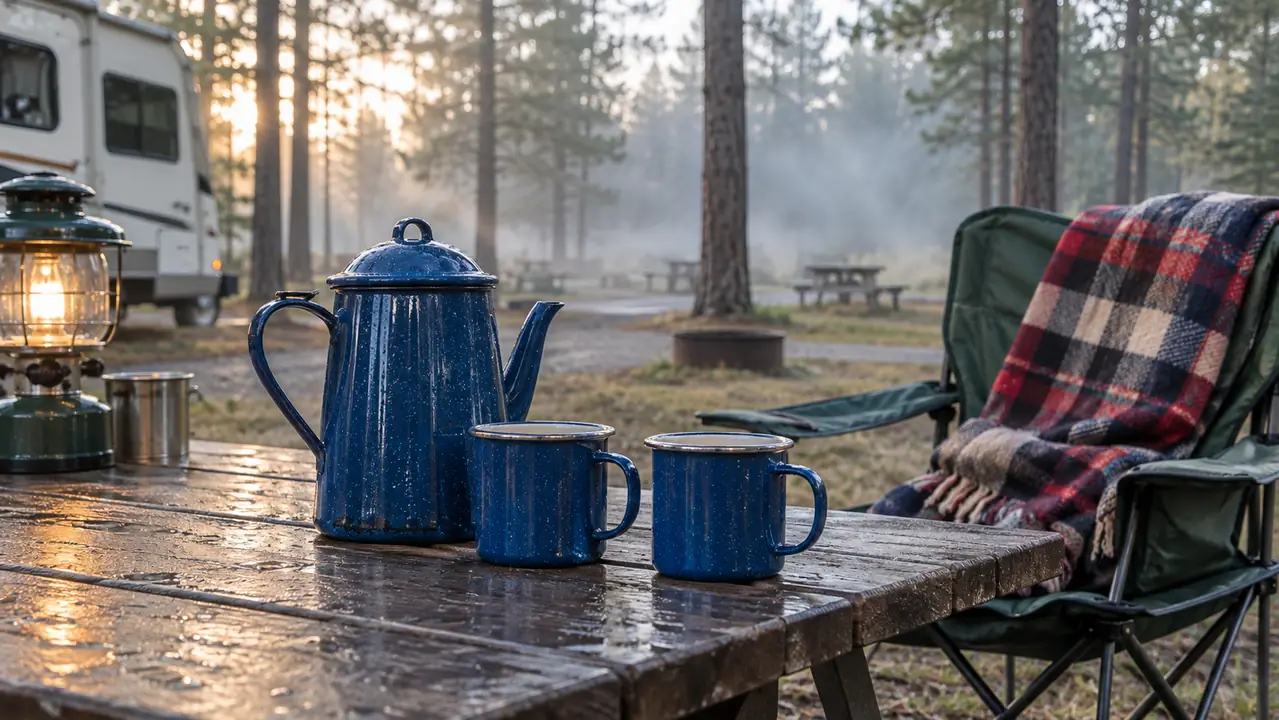
There is a kind of light you want for cooking and a different kind you want for sitting. Cooking wants light on the surface, no shadows, and no glare in your eyes while you are holding a knife. A lantern with a 360 degree spread on the table does that well, and it does it better hanging than sitting, because hanging puts the light above your hands. Set it down on the tabletop and the pots cast shadows right across the cutting board.
Sitting wants less. One of the things I have come to appreciate about a lantern rated at 1000 lumens is that you can move it further away. Hang it from the branch over the table, sit three feet back, and you have enough light to see your cards without feeling like you are being interrogated. The propane lantern does much the same thing, but its output sits right where the mantles are, and you are stuck with whatever that is.
Cold Nights, Wet Dogs, and Where Things Actually Hang
Our routine has settled. The lantern comes out of the duffel before the tent goes up, because the tent goes up faster with light. It hangs from the loop at the top of the tent while we lay out the pads, then moves to the branch over the table for dinner. On a cold night it sleeps in the duffel near my feet rather than in the cold cargo area, on the theory that a battery which starts the evening warm lasts longer. Juniper sleeps on the sleeping pad regardless of where the lantern is, and her tail has knocked it off the table twice with no damage done.
The propane lantern still comes out for the October trip, and for the one weekend a year when we camp with friends who arrive with a truck and a full cooler and no interest in batteries. It hangs from the same branch, lights the same table, and smells like every campsite I have ever been in. Then it goes back in the garage, and the Lepro goes back in the car.
Who Should Buy Which
Buy the Lepro if you camp the way most people camp. Drive in, set up, cook, eat, read, sleep, repeat. If you want a light you can hang inside a tent, hand to a kid, or leave on the table while the dog wanders past it, the LED is the practical answer. If you are packing a car with a dog and a cooler and a tent and you have no room for a spare canister, it is the obvious answer. The two hooks alone buy it a permanent place in the duffel, because a hook means you never have to find a flat spot in the dark.
Buy a propane lantern if your trips run into real cold, if you are off grid for days at a time, or if the firelight quality is the point for you rather than an afterthought. Some people camp for the hiss and the glow and the warmth at their hands. That is a legitimate reason and no LED will give it to you. Plenty of people I know own both, and reach for the gas one about twice a year, which tells you most of what you need to know.
What Goes in the Outback Every Friday
1000 lumens, 360 degree spread, two hooks, 550 grams, and no mantles to tie in the dark with cold fingers.
Amazon Check Today's Price on Amazon →