
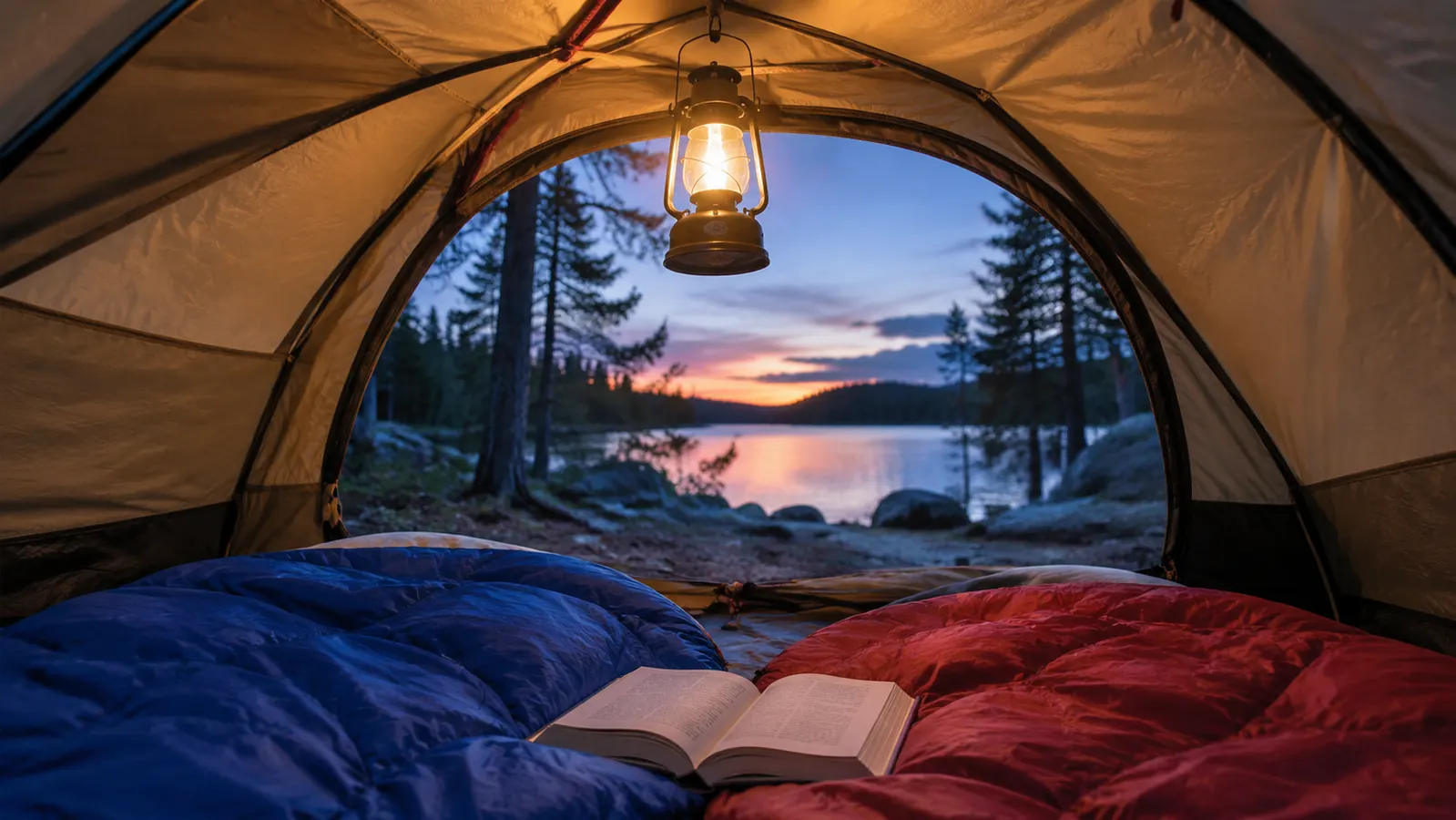
The first night I hung the Lepro lantern from the gear loop at the top of our tent, Glenn looked at it and said, that is not going to be enough light to read by. Twenty minutes later he was forty pages into a paperback and had stopped mentioning it. That is most of the review, honestly. But I have been running this lantern since April, most weekends, across a dozen state park campgrounds in western Washington, and there are a few things I wish someone had told me before I bought it.
I am Marla. I am 58, retired from school libraries, and I camp in a 2017 Subaru Outback with my husband Glenn and a 42 pound Australian cattle dog mix named Juniper. Everything we own has to fit in that car with the dog and the cooler. That is the filter I use for gear. Not whether it looks good in a catalog photo, but whether it survives a season of being packed, unpacked, set down on gravel, and sniffed by a dog with muddy feet.
The Quick Verdict
Bright, genuinely packable, and it hangs from two ends so you can aim the light where you actually need it. Water resistant rather than waterproof, and the plastic body will show every season it has seen.
Amazon Check Today's Price →One lantern that lights the whole tent instead of one corner of it
The Lepro hangs from a tent loop or a tarp ridge, throws light in every direction, and recharges instead of eating batteries. It is what has been in our gear tote since April.
Amazon Check Today's Price on Amazon →How I've Used It
We camp most weekends from April through October, mostly drive-in sites at state parks within two hours of Olympia, plus one longer trip each summer. That is not expedition use. It is the kind of use where you pull in at four in the afternoon, set up in the rain if you have to, cook, eat, read, sleep, and pack up the next morning. A lantern has to handle all of that without being babied. The Lepro has lived in the car since April and I have not once had to think about whether I remembered it, because it goes in the bin with the stove now and that is the end of it.
The routine is simple enough to describe in one breath. I pull it out of the tote, hang it from the loop at the top of the tent, and press the button on top. That is the whole operation. There is one hook on the top and one on the base, which I did not think mattered until I started using them for different jobs. Top hook for hanging from the tent loop. Base hook for hanging it upside down off a branch or a tarp ridge when we want the light down on the table instead of up on the tent roof.
Juniper's contribution to this review is that she knocked it off the picnic table twice and stood on it once. It is plastic, it weighs a little over a pound, and it came through both events without a crack. She is 42 pounds and not gentle with anything. I would not recommend using a lantern as a dog toy, but I can report what happened when it briefly became one.
What I have not done with it is anything dramatic. No whitewater, no month-long expedition, no subzero nights. If that is the review you need, this is not it. What I can tell you is what a hundred ordinary evenings in the tent look like, which is closer to how most of us actually camp anyway.
What 1,000 Lumens Actually Looks Like Over a Picnic Table
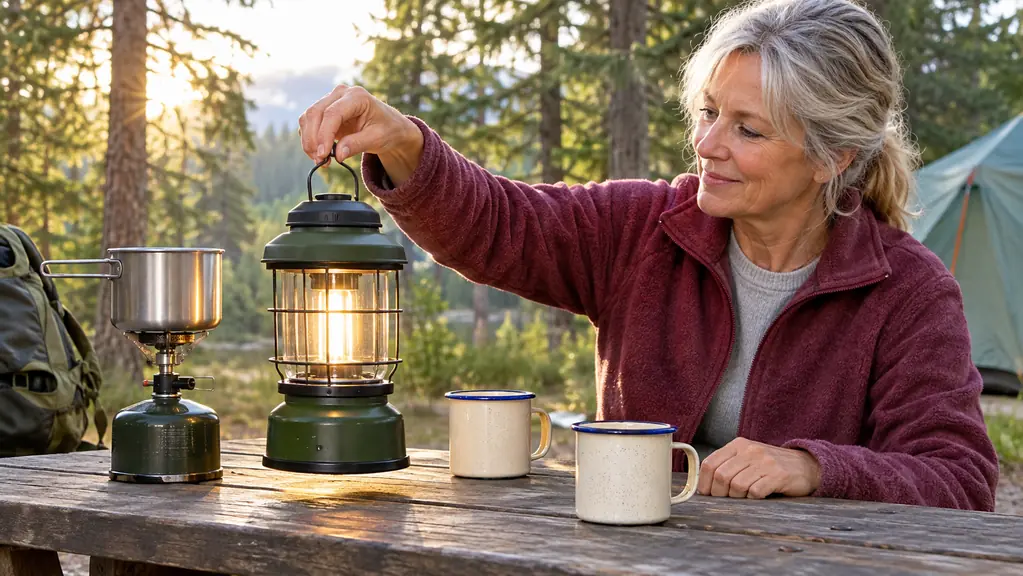
Lumens are one of those numbers that get inflated in listings, so I will tell you what it looks like in practice. At full brightness, hanging maybe a foot and a half above a picnic table, this lantern lights the table, both benches, and the ground immediately around them well enough to see what you are eating and to find the thing you dropped in the dirt. It is not a floodlight for a whole site. It is a very good circle of light, and if you have ever eaten dinner by the glow of a phone screen, you will notice the difference in the first thirty seconds.
The 360 degree beam angle is the part I actually notice. Most of the lanterns we have owned either point down like a flashlight standing on its head, or they throw light in one direction and leave the other half of the tent in shadow. This one has two light sources and throws in every direction, so hanging it in the middle of the tent makes the whole interior usable. Glenn reads on his side, I read on mine, and neither of us is squinting into a dark corner.
For cooking I usually drop it off full brightness. Over the table it is almost too much at full, and there is no reason to spend the battery that way. When we are just sitting and talking after dinner, the lower setting is the one that gets used, and it also runs noticeably longer there. The listing states 12 hours of battery life, and that number is doing the same job all runtime numbers do, which is assuming you are not running it at full blast from dusk to dawn.
One honest note. It is not a substitute for a headlamp when you leave the campsite. Walking to the bathroom at eleven at night, I take the headlamp, because carrying a lantern that throws 360 degrees just means I light up the bushes on both sides of the trail and ruin my night vision in the process. The lantern is for the campsite. The headlamp is for the walk.
The Two Hooks Are the Real Feature
I have owned lanterns with one hook and I have owned lanterns with no hook at all, and the ones with no hook end up sitting on the ground getting kicked. Two hooks sounds like a trivial thing to write a section about. It is not, because it changes where the light can go. Hanging it from the tent loop puts light above head height, which is what you want for reading. Hanging it upside down from a tarp ridge puts light down on the table, which is what you want for eating and for card games that get out of hand.
The hooks are also how it stores. It hangs off the side of the gear tote in the garage instead of rattling around in a drawer, and when we pack the car it goes in the narrow gap beside the cooler where nothing else fits. In a 2017 Outback with a dog and a week of gear, that gap is valuable real estate. Small design decisions like that are the difference between gear that comes with you every trip and gear that gets left in the garage because it is a nuisance to pack.
Runtime, Recharging, and Cold Mornings
It is rechargeable, which is the main reason we switched. We used to go through disposable batteries at a rate that felt wasteful, and always at the wrong moment, usually the night we arrived after dark. This one charges and goes back in the tote. The listing puts the battery at lithium ion, two cells included, 5 volts, and I top it up off a small adapter in the car when we are driving between sites. That routine takes no thought, which is the highest compliment I can pay a piece of camping gear.
A full charge has been enough for a full weekend of evening use, hanging in the tent from about eight until we turn in, plus a morning of light while we make coffee and find the coffee. I have not managed to run it dead over a whole season of weekend camping. If you are doing a week off grid with no power source at all, that is a different calculation, and you should be thinking about how you will recharge anything, not just this.
Cold is the thing I watch, because a lithium battery is a lithium battery and they all lose capacity when the temperature drops. On a cold October night near forty degrees, I noticed the light dimmer by the end of the evening than it had been in August, which is chemistry and not a defect. If you camp late into the fall, keep it inside your sleeping bag until you actually need it and you will get more out of the charge.
At full brightness, hanging a foot and a half above a picnic table, it lights the table, both benches, and the ground around them.
Rain, Mud, and a Plastic Body
It is rated water resistant, not waterproof, and I want to be precise about the difference because a lot of listings blur it. Water resistant means it survives rain and splashes. It does not mean you can drop it in a creek and expect it to work afterward. Ours has been out in steady drizzle under a tarp and came through fine. I have not tested the creek, and I do not intend to.
The body is plastic and it looks like plastic. After a season there are scuffs on the base from being set down on gravel and a scratch on one side from the tote. Nothing structural, nothing that affects the light, and nothing I would call a problem. If you want camping gear that still looks new in year three, this is not that, and neither is anything else you actually use.
How It Compares to What We Had Before
Our previous lantern was a hand-me-down that took four D batteries and cast a yellow circle about the size of a dinner plate. It worked. It also meant a stop at the hardware store before every trip and a bag of spent batteries in the garage that I kept meaning to recycle. The difference is not really brightness, though there is plenty of that. The difference is that the light now covers the whole tent instead of one spot, and that I never think about batteries anymore.
I have also used a propane lantern, and I understand why people love them. They are warm and they throw a lot of light. They also need fuel, they need mantles, they get hot enough to matter around a dog and a plastic table, and they cannot come inside the tent. The Lepro is the light that comes inside with us. That is the job it does, and it does that job better than anything else in our bin.
What I Liked
- 360 degree light from a single hang point, so the whole tent is usable and not just one corner
- Two hooks, top and base, which lets you hang it right side up in a tent or upside down over a table
- Rechargeable with the cells included, so no last minute run for batteries
- A little over a pound, light enough to hang from a tent loop or a tarp ridge without sagging it
- Bright enough at 1,000 lumens to cook and eat by, with a lower setting for sitting around
Where It Falls Short
- Water resistant only, so it needs shelter in real weather
- Plastic body scuffs and scratches with normal use
- Runtime at full brightness is much shorter than the stated 12 hours
- No substitute for a headlamp once you leave the campsite
Who This Is For
This is for the drive-in camper who wants light in the tent and over the table without stringing a cord or hauling a fuel bottle. If your trip looks like pulling into a state park site, setting up in twenty minutes, cooking, reading, and going to bed, this is the right kind of lantern. It suits a car, a small trailer, or a tent pad. It suits people who would rather plug something into the car than buy batteries by the pack, and it suits anyone who has ever held a phone in their teeth while trying to find a sock.
Who Should Skip It
Skip it if you need to light a group of ten around a fire ring, because this is a campsite light and not a stadium light. Skip it if you camp where everything stays soaked for days, because water resistant is not the same as submersible. Skip it if you are backpacking and counting ounces, since at a little over a pound there are lighter options and you will feel the difference on a long carry. And skip it if you want a lantern that also charges your phone, because that is not what this one is. For everyone else, the honest summary is that it has been in the car since April and I have not once wished I had brought something else.
If your tent light is still a phone on top of a duffel bag, this is the upgrade
Bright, rechargeable, and it hangs from either end so the light lands where you need it. Check today's price and see the current listing details on Amazon.
Amazon Check Today's Price on Amazon →