
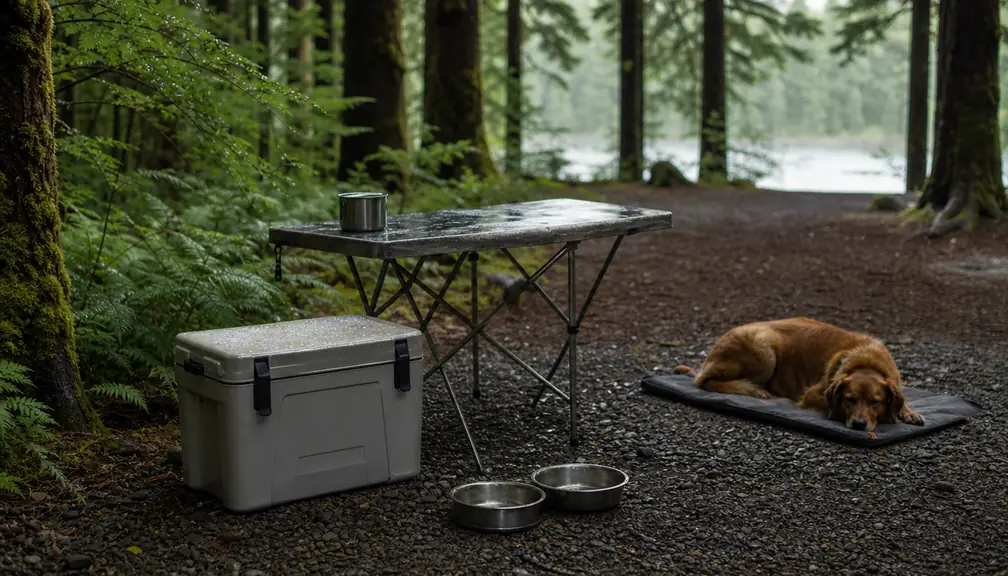
The cooler is the last thing I pack and the first thing I regret. For six seasons we used a soft-sided bag that sweated through the bottom of whatever it sat on and left a ring on the cargo mat of the Outback that I have not entirely forgiven. In May I replaced it with the Igloo Trailmate, a 50-quart hard shell ice chest, mostly because I was tired of mopping. Sixteen weekend trips later, from a wet state park outside Shelton to a dry Forest Service site above the Naches, I have a settled opinion about it.
Here is the short version. The Trailmate does the job I bought it for and it does it without drama. It is not light, it is not small, and it will not fit behind the second row of a sedan with anything else along for the ride. But if your camping is driving to a site, unfolding a table, and eating three real meals a day out of a cooler, this is the kind of thing that stops being a chore somewhere around the second trip.
The Quick Verdict
Holds ice through a three-day weekend and shrugs off gravel, tailgates and dog claws. It is a two-person lift once it is full.
Amazon Check Today's Price →The end of the soggy grocery tote
Fifty quarts, 1.5-inch foam-insulated walls, and a hard shell that does not care what the dog does to it. Check today's price and current availability.
Amazon Check Today's Price on Amazon →How I've Used It
Our season runs from April to October, mostly drive-in campgrounds in the Cascades and along the coast, plus one longer week somewhere farther out each year. Glenn, my husband, handles the cooler and the fire and is not allowed near the tent poles. That division of labor means I am usually the one loading it on a Friday morning and the one cleaning it out on a Sunday afternoon, so I notice things like whether the lid closes flush and whether water pools in one corner.
The first trip out was two nights at a park with a gravel pad and a picnic table about forty feet from the car. I loaded two blocks of ice, a gallon jug of water, a bag of apples, a dozen eggs in a hard case, a package of sausages, a block of cheese, butter, and a jar of pickles, and it closed without argument. Juniper supervised from the cargo area and contributed nothing. The second trip carried the same load plus a watermelon, which is a ridiculous thing to bring camping and which I will bring again.
What I did not expect was how much a hard shell would change the packing itself. The soft bag used to collapse into whatever space was left and then sag outward when it was full, which meant everything beside it shifted all weekend. This one keeps its footprint. That is good when you want to stack a tote on the lid and bad the one time you try to shove it into a gap that is two inches too narrow.
By August the routine was settled. The cooler rides behind the driver's side, the dog's bed goes behind the passenger seat, the duffel wedges between them, and the whole arrangement takes about four minutes. The trips where I have tried to reorganize it have all been worse.
There was one weekend in July when it rained the entire time and we barely opened the lid, and the ice lasted all three days with no special handling. Then there was a hot dry weekend in early September where we left it sitting in the sun by accident and lost half the ice by Saturday evening. Same cooler, same load, different behavior. That is not a product flaw, that is what happens when you leave a cooler in the sun, and I mention it because I spent years blaming equipment for my own mistakes.
What 50 Quarts Actually Holds
The listing says 81 cans. That number is accurate and completely useless if you are packing food for two people and a dog. Here is what 50 quarts meant for us on a three-day weekend.
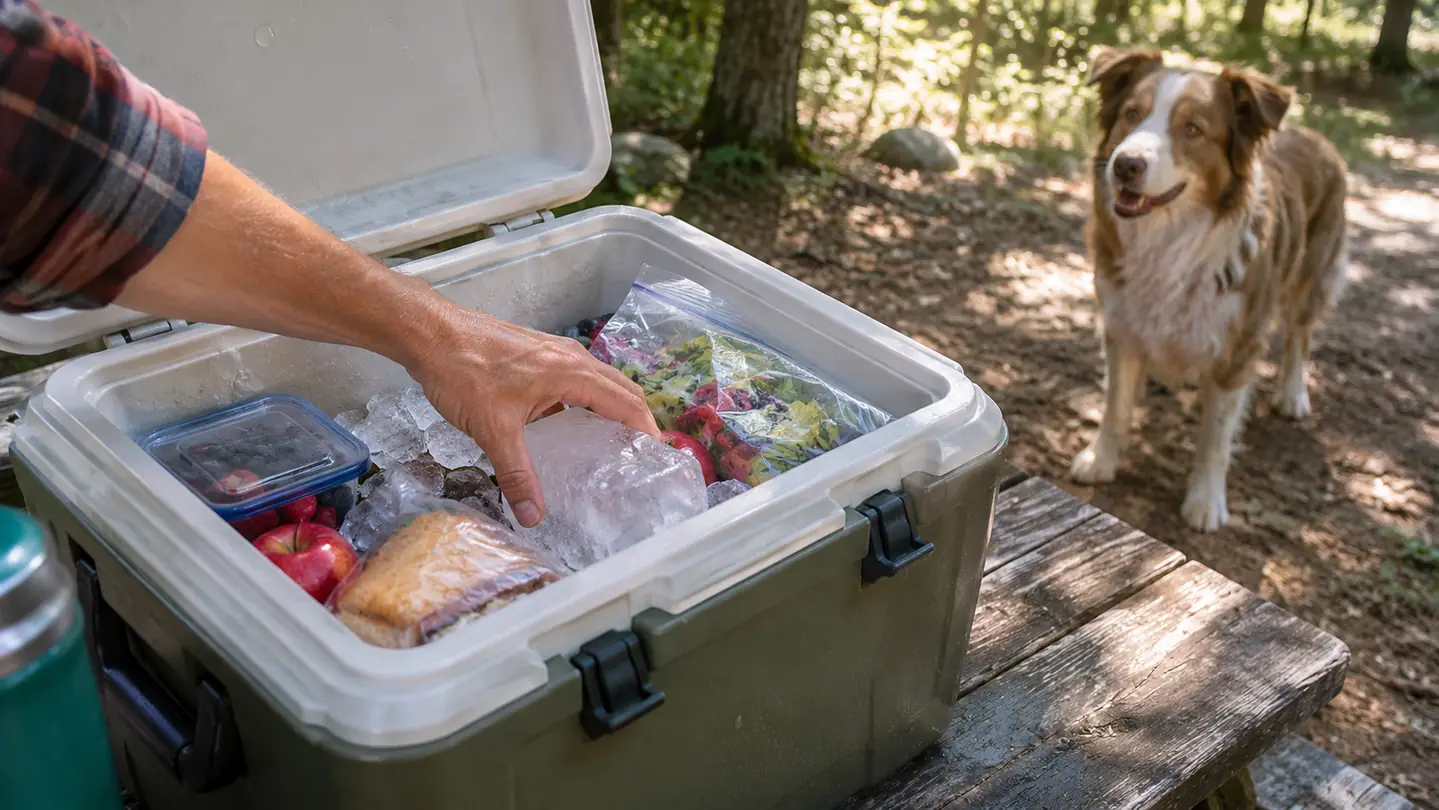
Two blocks of ice, a gallon of drinking water, a quart of milk, a dozen eggs, a pound of sausage, a block of cheese, a stick of butter, a bag of apples, a head of lettuce, four peppers, a jar of pickles, a jar of mustard, a package of tortillas, a bag of carrots, and a container of Thursday's leftovers. That fills it. There is no room for a second watermelon and no room for beer if you also want the milk.
The footprint is the part I underestimated. At 25.7 inches wide and 18 inches deep it takes a real share of the cargo area in a wagon. With the dog's bed on one side and the duffel on the other, it fits, but it fits the way a hard suitcase fits: there is one arrangement that works and you learn it in a hurry. At 16.7 inches tall it sits low enough that I can still see over it through the rear glass, which matters more at 58 than it did at 38.
If you are deciding between this and something smaller, be honest with yourself about how many days you actually camp. Fifty quarts for a single overnight is a lot of empty space and a lot of ice doing nothing but melting.
The Insulation, and Whether It Matters
The Trailmate has 1.5-inch foam-insulated walls and an insulated lid. That is thicker than the soft bag ever was, and it is the reason the ice behaves differently. Igloo also builds in what they call Cool Riser Technology, which elevates the body of the cooler off whatever hot surface it is sitting on. In practice that means I stopped parking it on the tailgate in direct sun, which I had been doing for years and which was quietly costing me a bag of ice every trip.
Real numbers from our season, since that is what I would want to read. Two blocks of ice went in on a Friday morning in June. Sunday afternoon, roughly 54 hours later, there was still a solid chunk in the bottom and the water was cold enough that the milk was fine. That is the whole test as far as I am concerned. I do not need a cooler rated in days on a spec sheet. I need to know that Thursday's sausage is still good on Sunday morning, and it was.
One thing that surprised me: the outside of the shell stays dry, not sweaty the way the old bag was. The cargo mat has not had a wet patch on it since May, which was the entire point of the purchase and the reason I am not especially interested in going back.
Two things I would tell anyone buying a hard cooler for the first time. Drain the meltwater before it gets deep, because cold water is fine and warm water is a swamp by Saturday. And do not fill the whole thing with cubed ice from a gas station. Blocks last, cubes cool fast and disappear.
Fifty-four hours after two blocks of ice went in, there was still a solid chunk in the bottom and the milk was fine. That is the whole test.
Living With It: Handles, Weight and the Back of the Car
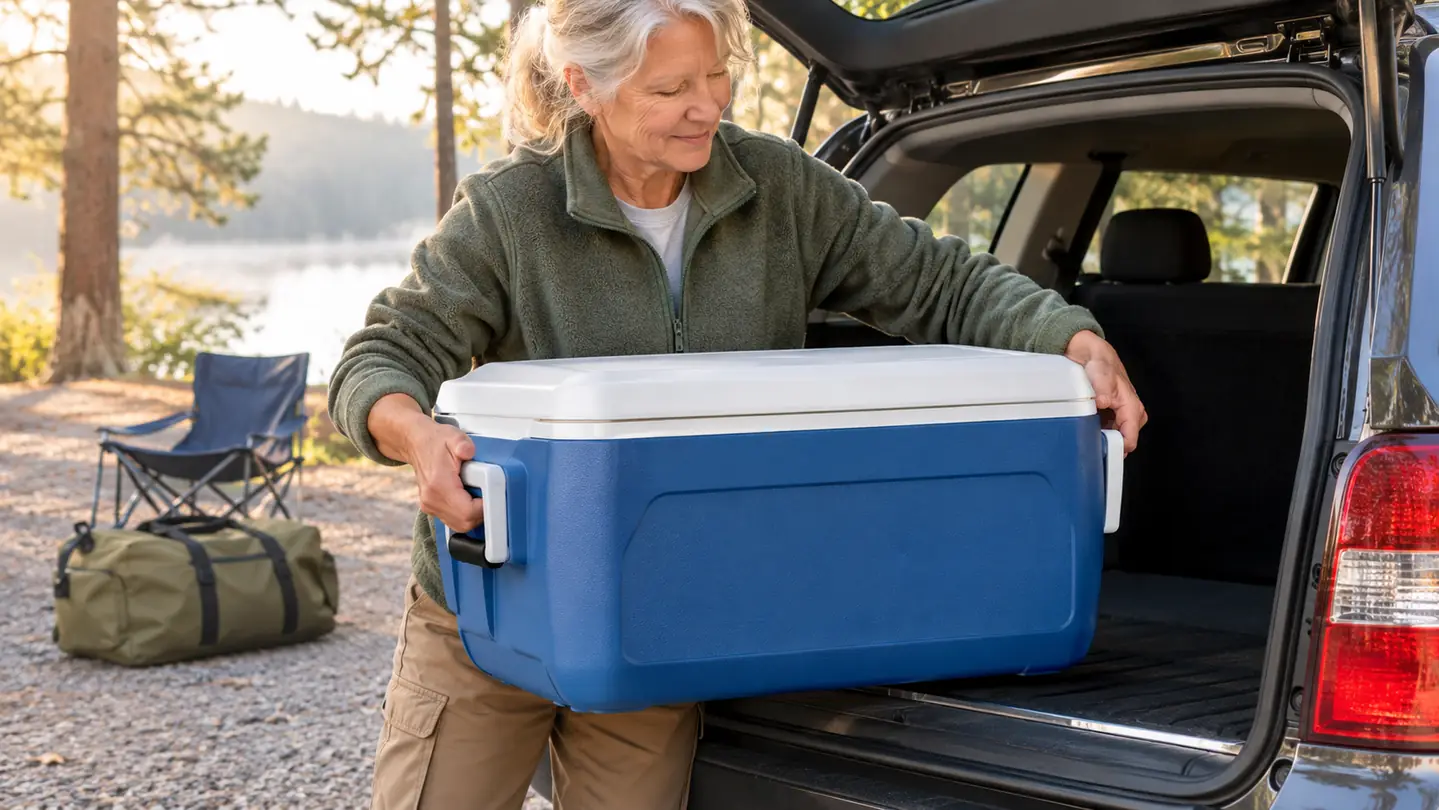
The side handles are wide, with a reinforced crossbar and a diamond-textured grip. That sounds like catalog language until you carry a full cooler forty feet across gravel. The grip does not slip when your hands are wet, and the crossbar keeps the whole thing from flexing. Glenn takes one side and I take the other, and we have not dropped it yet.
Empty, it weighs 15.4 pounds. Full of ice and a weekend of food it is a good deal more than that, and this is the honest tradeoff of a hard shell. I can lift it into the back of the Outback by myself when it is empty or half full. When it is loaded I wait for Glenn, and neither of us is embarrassed about it at our age.
Cleaning it is the part nobody warns you about. The shell wipes out with a rag and does not hold smells the way the soft bag did, which is a genuine improvement after a weekend of sausage and cheese. Getting the last of the water out means upending it on the porch to dry, and upending 25 inches of cooler is a two-person job at our house. I do it Sunday evening and it is dry by Monday morning.
As for durability, I sew, mostly gear repairs, so I look at seams and closures whether I want to or not. The lid on this one still closes flush after a full season with no warp and no play. The Igloo shell has a few scuffs from gravel and one scratch from a misguided attempt to slide it across a picnic table. Juniper has stood on the lid twice, which I do not recommend to anyone, and it came out of both events fine.
What I Liked
- Holds ice through a three-day weekend in real summer conditions
- Hard shell shrugs off gravel, scuffs and dog claws
- Wide handles with a textured grip stay put when your hands are wet
- Wipes clean and does not hold food smells
- Fifty quarts is genuinely enough for two people for three days
Where It Falls Short
- 15.4 pounds empty, and considerably heavier once loaded
- 25.7 inches wide takes a real share of a wagon's cargo area
- Needs two people to move comfortably when full
- Draining and drying means upending it on the porch
- Overkill if most of your trips are single overnights
Where It Falls Short
The weight is the real cost. You are trading convenience at the campsite for effort at the car. Every trip I make two carries from the tailgate, one for the cooler and one for everything else, and I have made peace with that. If you have a bad back, or you camp alone, this is the paragraph to read twice before you order.
Second, 50 quarts is a specific size for a specific trip. It is right for two people for two to three days. It is too much for one night and not enough for a week without resupplying. I would rather own the right size for the trips I actually take than a size that is theoretically flexible and practically wrong.
Third, the hard shell does not negotiate. A soft cooler can be squashed into the last six inches of a trunk. This one cannot, and there will be at least one trip where you discover that in a parking lot with the hatch open and the dog already settled.
Who This Is For
This is for the drive-in camper who eats real food at the campsite. If you are packing meat, eggs, dairy and vegetables for two or three days, if you have a second person to help lift, and if you have a vehicle with an honest cargo area, the Trailmate is the least fussy cooler I have owned. It suits people in their forties and up who have stopped thinking of gear as something to optimize and started thinking of it as something to carry.
If you are the person in your group who ends up doing the packing, this cooler is easier to pack than a bag because you can see the layers. Ice on the bottom, then the things that cannot get wet, then the things that can, then a towel on top. It is a small thing that makes a Friday morning go faster.
It is also for anyone who has gotten tired of the specific misery of a soft cooler that weeps onto the cargo mat. That was my entire motivation, and Igloo solved it on the first trip out.
Who Should Skip It
Skip it if you camp alone and walk your gear to a tent pad. Skip it if your vehicle is small enough that 25.7 inches of width is a real argument you would lose. Skip it if you are doing single overnights, where a smaller cooler and a bag of ice from the camp store will do the same job with less lifting.
And skip it if you want one cooler for everything, from an afternoon at the lake to a week in the woods. This is a good cooler for a particular kind of trip and it does not pretend to be the only thing you will ever need.
If your weekends look like ours, this is the size
Fifty quarts, 1.5-inch insulated walls, and a shell that survives a season of gravel and dog. Check today's price and availability before your next trip.
Amazon Check Today's Price on Amazon →